


A cinnabar bracelet gets its deep vermillion color from one of two sources: hand-carved lacquer built up over a wood or resin core, or the raw mineral cinnabar itself, which is mercury sulfide (HgS). The best cinnabar bracelet for daily wear in 2026 is the carved lacquer style, not the raw mineral one — the mineral form is a collector's item, not a bracelet you put on your wrist every morning.
- Carved cinnabar lacquer bracelets are the safest, most traditional choice for daily wear in 2026.
- Raw mineral cinnabar contains mercury sulfide and is not recommended for prolonged skin contact.
- Cinnabar-dyed howlite offers the color at a lower cost but the dye fades with wear.
- Red tiger eye and jujube wood Pixiu pieces from EclipticJew give a similar warm red tone without the mercury sulfide concern.
Why cinnabar bracelets need a closer look
Cinnabar has carried meaning in Chinese tradition for centuries — Taoist practitioners historically used cinnabar-based ink to write protective talismans, and the mineral's fire-red tone became associated with vitality and warding off harm. That history is exactly why the word "cinnabar" shows up on so many bracelet listings today, even when the actual material inside the bead is lacquer, dyed howlite, or resin rather than the mineral itself.
Before buying, it helps to know which of the three you're actually looking at. EclipticJew carries stones and Pixiu pieces built around the same protective and prosperity intentions cinnabar traditionally carries, using materials that are meant for everyday wear.
What makes the best cinnabar bracelet
- Material honesty — is it carved lacquer, dyed stone, or raw mineral cinnabar
- Wearability — can it handle daily skin contact, water, and knocks
- Color depth — a true vermillion versus a flat orange-red dye job
- Craftsmanship — visible carving detail on lacquer pieces, bead consistency on stone pieces
- Symbolic fit — does the piece connect to the protection or prosperity intention buyers usually want from cinnabar
Cinnabar bracelets at a glance
| Item | Best for | Standout feature | Key limitation |
|---|---|---|---|
| Carved cinnabar lacquer bracelet | Traditional lacquer art collectors | Hand-carved motifs over a lacquered core | Lacquer softens with heat or solvents |
| Cinnabar-dyed howlite bracelet | Budget-friendly cinnabar look | Lightweight, consistent color | Dye fades with wear over time |
| Raw mineral cinnabar bead bracelet | Display and collecting only | Genuine mercury-sulfide mineral, deep vermillion | Not recommended for skin contact |
| Jujube Wood Pixiu Amulet Bracelet | Wearable Pixiu symbolism in a warm red-brown tone | Carved Pixiu on natural jujube wood | Wood grain and tone vary piece to piece |
| Vintage-Style 8mm Red Tiger Eye Bracelet | Daily wear in a cinnabar-red hue | Chatoyant banding in red-brown tones | Denser and heavier than lacquer |
1. Carved cinnabar lacquer bracelet: best for traditional lacquer art collectors
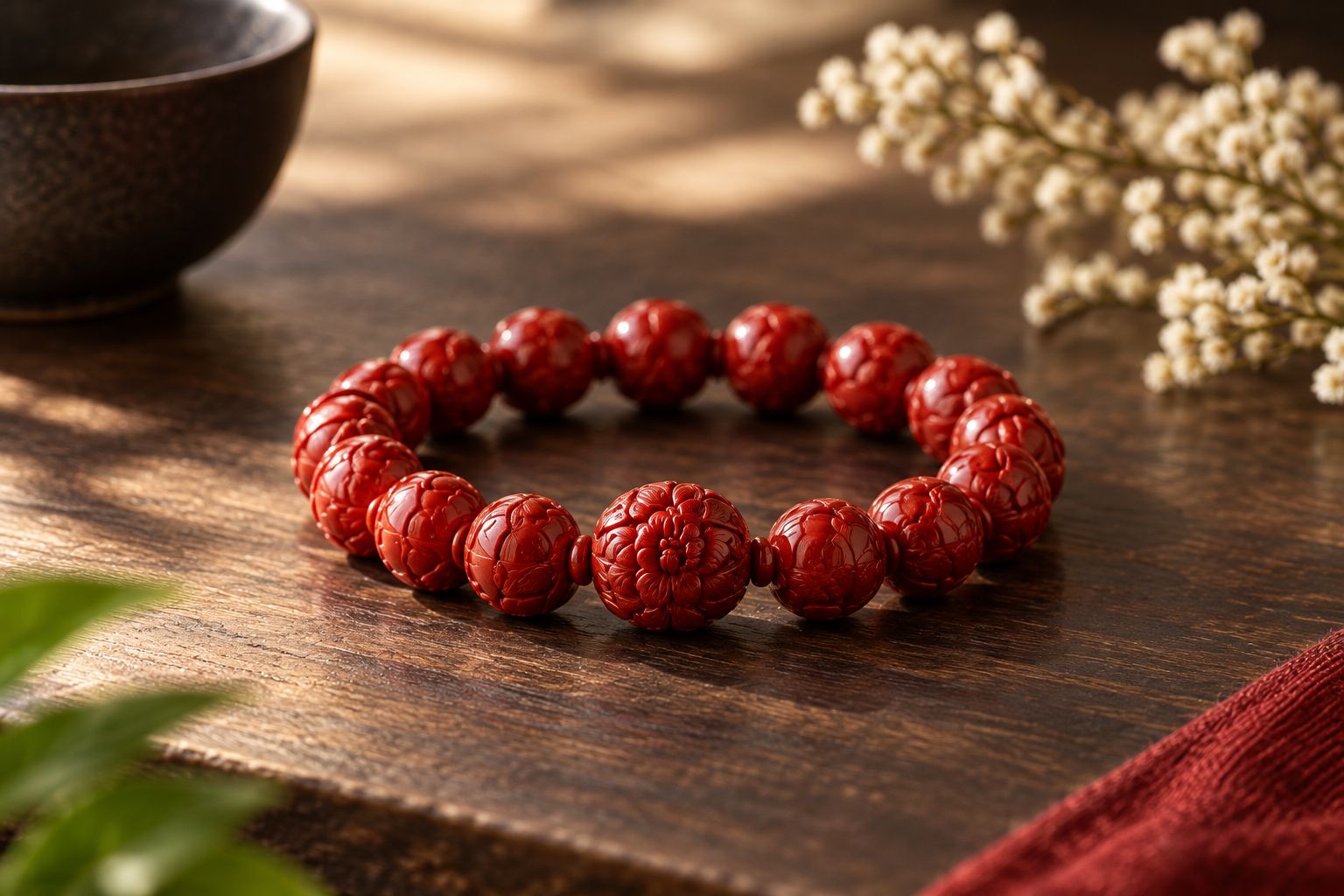
Carved cinnabar lacquer, known in Chinese as diāoqī, is built by layering red lacquer dozens of times over a wood or metal core, then carving the surface once it hardens. This is the technique behind most "cinnabar" jewelry sold as antique or artisan pieces, and it reached one of its most refined forms in Ming dynasty imperial workshops.
Carved cinnabar lacquer pros:
- Genuine traditional Chinese craft, not an imitation
- Deep, dimensional carving that dyed stone can't replicate
- Safe for daily wear since the lacquer surface seals the core
Carved cinnabar lacquer cons:
- Softer than stone — chips or cracks if dropped on a hard surface
- Sensitive to heat, alcohol, and strong solvents
- Genuine hand-carved pieces are harder to source than mass-market lookalikes
Best for: buyers who want the authentic craft behind the word "cinnabar." Verdict: Buy if you find a piece with visible hand-carving and you're prepared to handle it gently.
2. Cinnabar-dyed howlite bracelet: best budget-friendly cinnabar look
Howlite and magnesite are naturally porous, pale stones that take dye evenly, which is why they're the most common substrate for "cinnabar red" beads sold at lower prices. The color is convincing at a glance, but it's a surface treatment rather than the stone's natural tone.
Cinnabar-dyed howlite pros:
- Consistent, uniform color across every bead
- Lightweight and comfortable for everyday wear
- Widely available in multiple bead sizes
Cinnabar-dyed howlite cons:
- Dye fades or patches with sun exposure, sweat, and lotion
- Doesn't carry the carving detail or history of true lacquer cinnabar
- Resale or collector value is essentially none
Best for: shoppers who want the color on a budget and don't mind the dye wearing thin. Verdict: Hold — fine as a casual accessory, not a piece to build meaning around.
3. Raw mineral cinnabar bead bracelet: best for display, not daily wear
Genuine mineral cinnabar is mercury sulfide, the primary ore of mercury and historically the source of the vermillion pigment used in Chinese seal ink and painting. It's a real gemstone with genuine market presence, but its chemical makeup is the reason most reputable jewelers steer buyers away from wearing it directly against skin for extended periods.
Raw cinnabar mineral pros:
- The only option that is truly, chemically "cinnabar"
- Unmatched color depth and mineral luster
- Genuinely rare compared to lacquer or dyed alternatives
Raw cinnabar mineral cons:
- Contains mercury sulfide, not recommended for prolonged skin contact
- Softer and more brittle than most gemstone beads (Mohs hardness around 2 to 2.5)
- Hard to verify authenticity without lab testing
Best for: collectors who display the piece rather than wear it daily. Verdict: Skip for a bracelet you plan to wear every day in 2026 — this one belongs in a display case.
4. Jujube Wood Pixiu Amulet Bracelet: best wearable alternative with matching tone
The Jujube Wood Pixiu Amulet Bracelet carries the same warm reddish-brown palette that carved cinnabar lacquer is known for, built on natural jujube wood rather than lacquered resin. The carved Pixiu — the mythical Chinese guardian traditionally associated with wealth protection — echoes the same protective intention that cinnabar talismans historically carried.
Jujube Wood Pixiu Amulet pros:
- Warm red-brown tone close to traditional cinnabar lacquer
- Pixiu carving ties to the same protection and prosperity symbolism
- Natural wood, safe for everyday skin contact
Jujube Wood Pixiu Amulet cons:
- Wood grain and tone vary piece to piece, unlike uniform dyed beads
- Not a substitute for someone specifically collecting mineral or lacquer cinnabar
Best for: buyers who want cinnabar's color and symbolism in a piece meant for daily wear. Verdict: Buy if the wealth-protection intention behind Pixiu resonates with you.
5. Vintage-Style 8mm Red Tiger Eye Bracelet: best for daily wear in a cinnabar-red hue
The Vintage-Style 8mm Red Tiger Eye Bracelet uses heat-treated tiger eye, which shifts the stone's natural gold-brown chatoyance toward a red-brown tone close to cinnabar's vermillion. Tiger eye is traditionally associated with grounding and steady focus, a different intention than cinnabar's protective symbolism but a comparable visual match.
Red Tiger Eye pros:
- Durable, dense stone that holds up to daily wear
- Chatoyant banding gives visual depth similar to carved lacquer
- Traditionally associated with grounding energy, a useful everyday companion
Red Tiger Eye cons:
- Heavier than lacquer or wood beads of the same size
- The red tone comes from heat treatment, not a natural red tiger eye state
Best for: buyers who want a sturdy, red-toned bracelet for daily wear without any lacquer maintenance. Verdict: Buy for everyday durability over delicate craft appeal.


How the ranking works
Each item is scored on the same five criteria: material honesty, wearability, color depth, craftsmanship, and symbolic fit. Carved lacquer wins on authenticity and history. Dyed howlite wins on cost. Raw mineral cinnabar wins on rarity but loses on wearability, which is why it drops to a display-only recommendation rather than a top pick for 2026.
“The word cinnabar sells the bracelet, but the material behind the color is what decides whether you should actually wear it.”
Which cinnabar bracelet should you choose?
If you want the authentic craft, choose a carved cinnabar lacquer bracelet with visible hand-carving. If budget matters more than authenticity, cinnabar-dyed howlite gets the color without the cost. If you specifically want a piece for daily wear without any mercury-sulfide question at all, the Jujube Wood Pixiu Amulet Bracelet or the Vintage-Style 8mm Red Tiger Eye Bracelet both deliver the same warm red palette with materials built for everyday use in 2026.
FAQ
What is a cinnabar bracelet made of?
Most cinnabar bracelets are carved lacquer built over a wood or resin core, not the raw mineral. Genuine mineral cinnabar is mercury sulfide (HgS) and is far less common in jewelry than the lacquer or dyed-stone versions.
Is it safe to wear a cinnabar bracelet?
Carved cinnabar lacquer bracelets are generally fine for daily wear since the lacquer seals the core material. Raw mineral cinnabar contains mercury sulfide and isn't recommended for prolonged, direct skin contact.
What does cinnabar symbolize in Chinese tradition?
Cinnabar is traditionally associated with protection and vitality, and Taoist practitioners historically used cinnabar-based ink to write protective talismans. It's a cultural and spiritual association, not a medical claim.
How can you tell if a cinnabar bracelet is real mineral or dyed howlite?
Dyed howlite is lighter in weight and has a flatter, more uniform color. Genuine mineral cinnabar is denser and shows more natural variation in its vermillion tone.
What's a safe alternative to a raw cinnabar bracelet?
Red tiger eye and garnet-based Pixiu bracelets offer a similar warm red tone traditionally associated with protection and prosperity, without the mercury sulfide content of raw cinnabar.
How do you clean a carved lacquer cinnabar bracelet?
Wipe it gently with a dry, soft cloth. Avoid soaking it or using alcohol-based cleaners, since lacquer can soften and lose detail with prolonged moisture or solvent exposure.
Is cinnabar the same as red jasper or red agate?
No. Cinnabar is a mercury sulfide mineral, while red jasper and red agate are silica-based chalcedony and quartz varieties. They share a color family but not a chemical composition.
Does EclipticJew sell genuine mineral cinnabar bracelets?
Not as of 2026. The collection focuses on wood, agate, tiger eye and Pixiu pieces that carry a similar warm red tone and protective symbolism without the mercury sulfide content of raw cinnabar.
One last thing
Cinnabar was the primary source of vermillion pigment used in Chinese seal ink and painting for centuries — the same red you see stamped on traditional calligraphy scrolls traces back to this mineral. That's worth knowing before you pay a premium for "genuine cinnabar" jewelry in 2026: the historical prestige is real, but the jewelry-grade material behind most bracelets almost never is.


