


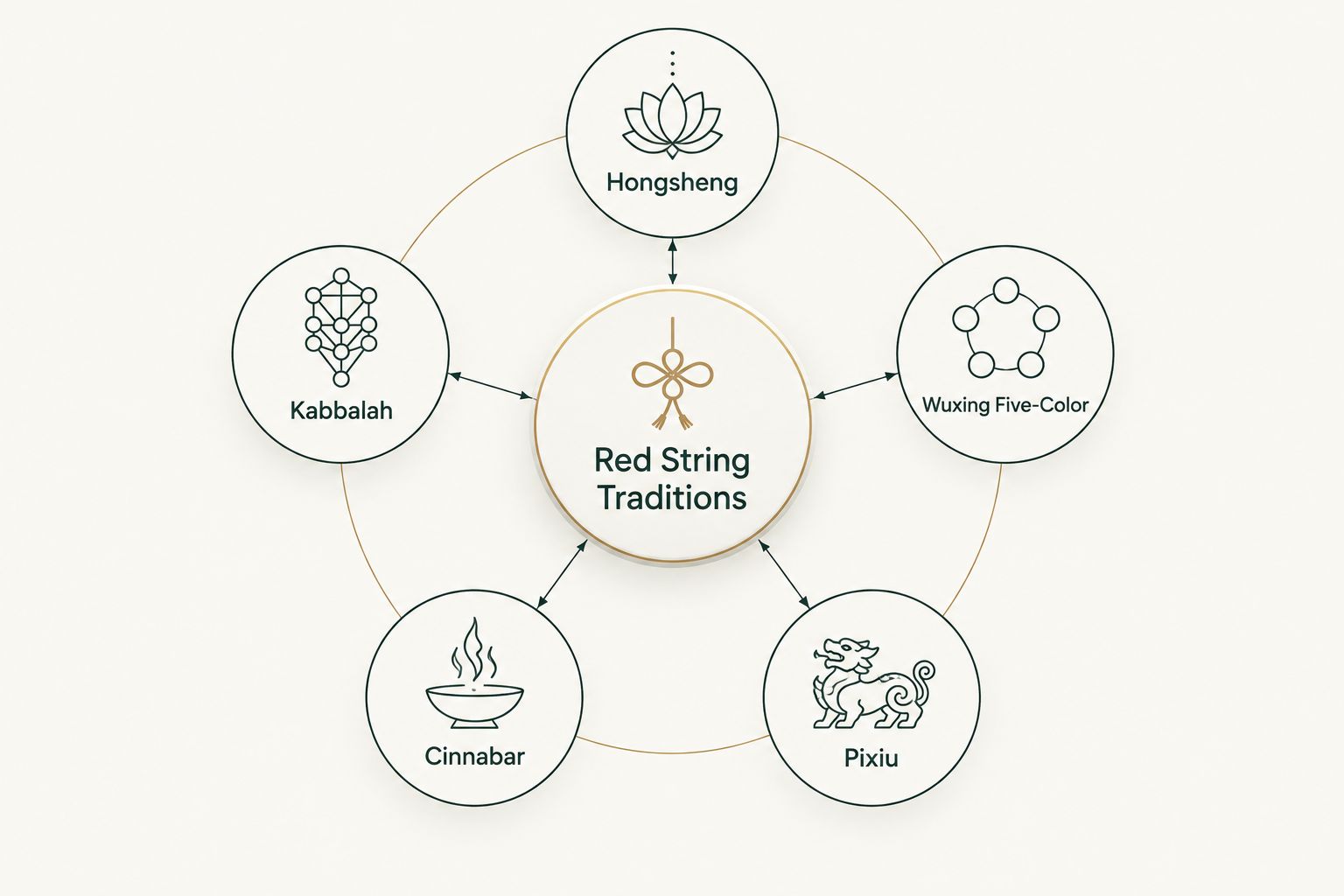
Choosing the best red string bracelet for good luck in 2026 depends less on the cord and more on the tradition behind it — a Chinese Hongsheng string, a Kabbalah red string, and a Taoist Pixiu amulet all use red thread, but they carry different rituals, different rules for wear, and different intentions.
- Chinese Hongsheng red string bracelet wins overall for everyday luck and simple daily wear in 2026.
- Kabbalah red string bracelet is the strongest pick for warding off negative energy or the evil eye.
- Pixiu red cord wealth amulet bracelet suits anyone focused on prosperity and career luck.
- Cinnabar red Taoist cord bracelets need sealed, lacquered beads, never loose or crushed mineral.
- Five-color Wuxing protection string works best as a seasonal or gifting piece, not daily wear.
Why This Matters
Searches for a red string bracelet for good luck spike every January as people reset intentions for the year ahead, and 2026 is no exception. The red string itself is not a single object — it is a shared color across at least three unrelated traditions, and mixing them up leads to buying the wrong piece for the wrong reason.
None of what follows is a medical or guaranteed-outcome claim. These are cultural and spiritual practices, traditionally associated with protection, luck, or intention-setting, not scientifically proven effects.
Best overall: Chinese Hongsheng red string bracelet. Best for warding off negative energy: Kabbalah red string bracelet. Best for family and children's protection: five-color Wuxing protection string. Best for spiritual ritual: cinnabar red Taoist cord bracelet. Best for prosperity: Pixiu red cord wealth amulet bracelet.
Each one below gets its own verdict, and none of them requires giving up the others — plenty of people wear a Hongsheng cord daily and add a Pixiu piece from EclipticJew's crystal and gemstone jewelry collection for a wealth-focused intention.
What Makes the Best Red String Bracelet
- Material and knotting method — cotton or silk holds a knot better than nylon and wears more honestly over months.
- Cultural source — Kabbalah, Chinese folk religion, Hinduism, and Taoism each use red thread differently; a bracelet should match the tradition you actually mean to draw from.
- Ritual of tying — many traditions specify who ties the string (a loved one, an elder, a monk) and on which wrist.
- Symbolic pairing — a plain cord differs from one paired with a charm, stone, or carved figure like Pixiu.
- Care and removal rules — some traditions say let the string fall off naturally; others allow cutting it after a set period.
- Honesty about limitation — a bracelet is a personal reminder of intention, not a guarantee of luck, wealth, or protection.
At a Glance: Comparing the Traditions
| Style | Best for | Standout feature | Key limitation |
|---|---|---|---|
| Chinese Hongsheng red string | Everyday luck and general protection | Simple, low-profile cord for daily wear | Cotton or nylon cord wears thin and needs replacing |
| Kabbalah red string | Warding off negative energy | Tied by a loved one in a personal ritual | Rooted in Jewish mysticism, not a universal practice |
| Five-color Wuxing protection string | Family and children's protection | Combines all five Wuxing element colors in one cord | A seasonal, festival-tied practice, not year-round wear |
| Cinnabar red Taoist cord | Spiritual protection rituals | Deep vermillion mineral tied to Taoist alchemical tradition | Cinnabar is mercury sulfide; jewelry-grade beads must be sealed |
| Pixiu red cord wealth amulet | Prosperity and career luck | Carved Pixiu figure doubles the wealth symbolism | Traditional guidance says avoid letting others touch it |
1. Chinese Hongsheng Red String Bracelet: Best for Everyday Luck
The Hongsheng, or plain red string, is worn across Chinese folk tradition, often during a person's benming nian — the zodiac year that repeats every 12 years and is traditionally considered a year needing extra protection. It is simply a red cotton or silk cord, sometimes tied by an elder or family member rather than bought pre-tied.
Hongsheng pros:
- Inexpensive and easy to find in cotton or silk
- Fits any wrist size and layers with other bracelets
- Simple enough to wear daily without drawing attention
Hongsheng cons:
- Cord frays and needs replacing every few months
- Carries little symbolism on its own without a charm
Verdict: Buy. It is the lowest-friction way to start with red string in 2026, and it pairs cleanly with a stone-based piece for a stronger intention.
2. Kabbalah Red String Bracelet: Best for Warding Off Negative Energy
The Kabbalah red string is tied around the left wrist — traditionally the receiving side of the body in Kabbalistic teaching — and is associated with warding off ayin hara, or the "evil eye." The custom is often traced to Rachel's Tomb in Bethlehem, where red string has historically been wrapped around the tomb before being cut and distributed.
Kabbalah red string pros:
- Rich, specific tradition with a clear ritual meaning
- Meant to be tied by someone else, making it a shared gesture
Kabbalah red string cons:
- Tied specifically to Jewish mysticism, so it may not fit every reader's practice
- Traditionally requires seven knots and a blessing, which is easy to get wrong alone
If warding off negative energy is the goal but the Kabbalah lineage does not fit your background, evil-eye jewelry from other cultures serves a similar function — worth comparing before committing to one symbol.
Verdict: Buy if the tradition resonates with your background or beliefs; otherwise look at a nazar or evil-eye piece instead.
3. Five-Color Wuxing Protection String: Best for Family Protection
The five-color string, or wusexian, threads together the five colors tied to Wuxing — the Chinese Five Elements philosophy of Wood, Fire, Earth, Metal, and Water. It is most closely associated with the Duanwu Festival (Dragon Boat Festival), when parents tie it on children's wrists for protection through the summer months, traditionally removing it after the first rain following the festival.
Five-color string pros:
- Draws on a complete elemental system, not just one color
- Strong tradition for protecting children specifically
Five-color string cons:
- Tied to a specific festival window, so it reads as seasonal rather than year-round
- Less recognizable outside Chinese cultural contexts
EclipticJew's five-color enamel glass bead bracelet draws on the same five-tone palette in a piece meant for adults year-round rather than one tied to the festival calendar.
Verdict: Wait. Save this style for a festival gift or a specific family-protection intention rather than a daily go-to.
4. Cinnabar Red Taoist Cord Bracelet: Best for Spiritual Ritual
Cinnabar is a naturally red mineral — mercury sulfide — historically linked to Taoist alchemical practice and used in red seals and lacquerware for centuries. In modern jewelry, cinnabar beads are carved and sealed rather than left raw, since the mineral is toxic if ingested or exposed through broken skin.
Cinnabar cons:
- Requires a sealed, lacquered finish; raw or crushed cinnabar is not safe to wear against skin
- Deep red color can fade with heavy sun exposure over time
Cinnabar pros:
- Historically significant color and material in Taoist practice
- Naturally striking, saturated red that doesn't rely on dye
A closer look at cinnabar bracelets covers how to check that a piece is properly sealed before buying.
Verdict: Hold. Confirm the coating and sourcing before wearing cinnabar daily — this is one style where the material itself demands a little homework.
5. Pixiu Red Cord Wealth Amulet Bracelet: Best for Prosperity
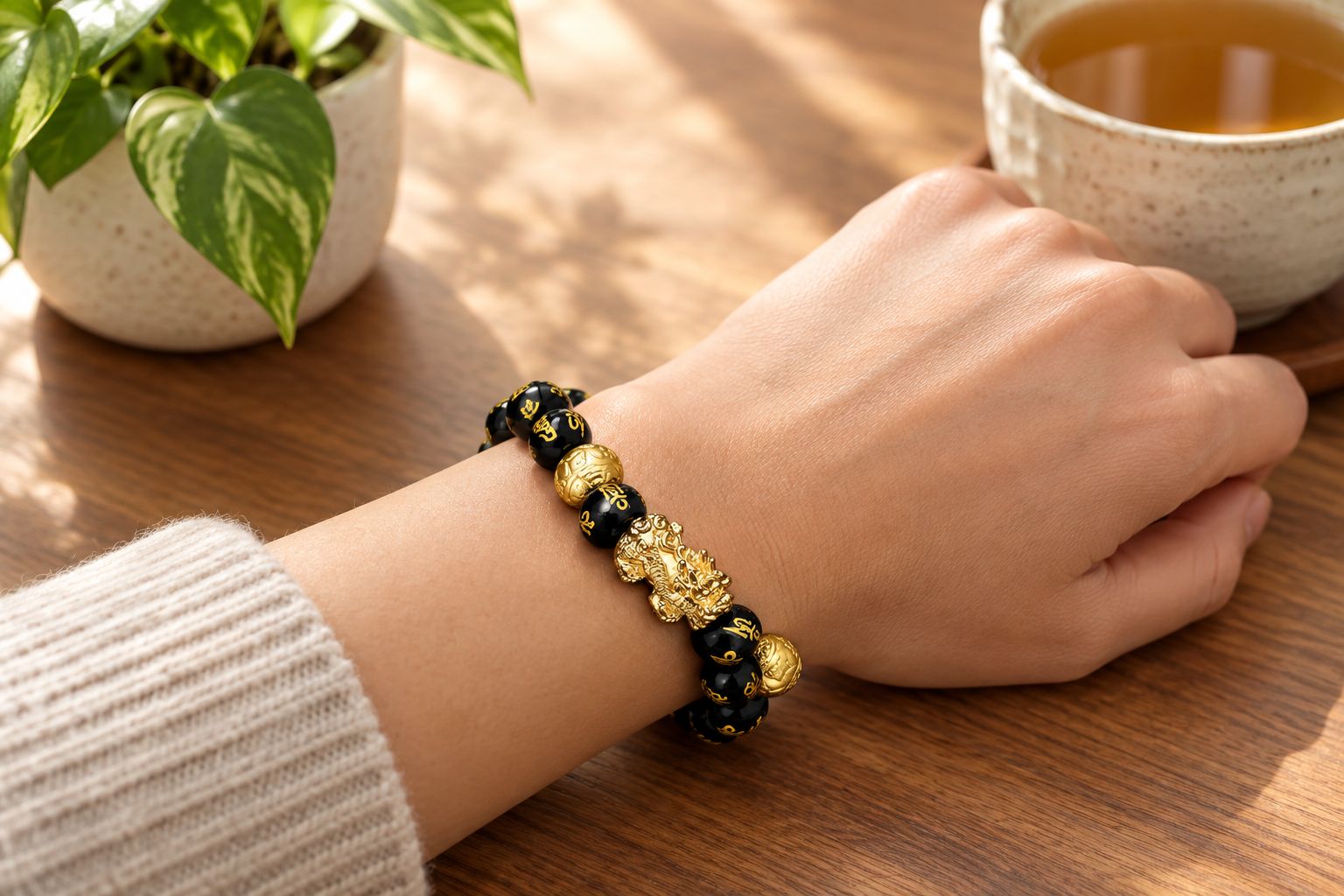
Pixiu is a mythical wingless lion-dragon hybrid in Chinese folklore, traditionally associated with attracting and guarding wealth. Pairing a carved Pixiu figure with a red cord is common in feng shui practice, since red is considered an active, protective color and the figure itself carries the prosperity symbolism.
Pixiu bracelet pros:
- Combines the red-cord tradition with a specific carved wealth symbol
- Widely used in feng shui practice, so guidance on care and placement is easy to find
Pixiu bracelet cons:
- Traditional guidance says avoid letting others touch or handle the figure
- Some lineages specify wrist and orientation rules that vary by source, so guidance is not universal
EclipticJew carries this pairing directly in its jujube wood Pixiu amulet bracelet, which sets a carved Pixiu on a wood-bead strand rather than a loose cord.
Verdict: Buy. Of the five styles, this is the one most people reach for when the intention is career or income, not general luck.
If prosperity and protection are the throughline, a few pieces pair naturally with the red-string intention without pretending to be a literal cord:


“A red string works only as well as the intention you tie into it.”
How These Rankings Were Made
Each style above was compared against the six criteria listed earlier: material and knotting method, cultural source, tying ritual, symbolic pairing, care rules, and honesty about what the piece can and cannot claim to do. The Hongsheng ranks first for accessibility; the other four rank by how specific and demanding their tradition is, not by how "powerful" they are — no source, including this one, can rank spiritual efficacy.
Which Red String Bracelet Should You Choose?
For most people starting out in 2026, the Chinese Hongsheng red string bracelet is the simplest, lowest-commitment entry point — cheap, easy to source, and flexible enough to layer with anything else. If the intention is specifically financial or career-focused, the Pixiu red cord wealth amulet bracelet is the stronger year-round choice, and EclipticJew's carved Pixiu pieces give that symbolism a more durable form than a plain cord. Save the five-color Wuxing string for a festival or a gift to a child, and treat cinnabar as a piece worth researching before buying rather than an impulse pick.
FAQ
What does a red string bracelet mean?
A red string bracelet is traditionally associated with luck, protection, or warding off negative energy, depending on which culture's practice it comes from. Chinese, Jewish, and Hindu traditions each use red thread with a different specific meaning attached.
Is the red string bracelet Jewish or Chinese?
Both traditions exist independently. The Kabbalah red string comes from Jewish mysticism and wards off the "evil eye," while the Chinese Hongsheng string is tied to zodiac-year protection and general luck.
How do you tie a red string bracelet correctly?
Many traditions specify that someone else ties the string for you rather than tying it yourself, since the gesture is part of the ritual. The Kabbalah version is traditionally tied with seven knots by a loved one.
Which wrist should you wear a red string bracelet on?
The Kabbalah tradition specifies the left wrist, considered the receiving side of the body. Chinese Hongsheng and Pixiu guidance varies by source, so there is no single universal rule.
What happens when a red string bracelet breaks?
In several traditions, a string breaking on its own is seen as having absorbed negative energy or fulfilled its purpose, not as a bad sign. Most guidance suggests replacing it rather than trying to retie the same cord.
How long should you wear a red string bracelet?
There's no fixed rule across traditions. The five-color Wuxing string is tied to a festival season and often removed afterward, while a Hongsheng or Pixiu piece is commonly worn indefinitely or until it wears out.
Can a red string bracelet get wet in the shower?
Cotton and silk cords can be worn in the shower but will wear out faster with regular water exposure. Sealed cinnabar or wood-bead pieces, like a Pixiu amulet bracelet, generally hold up better long-term if removed before bathing.
Is a Pixiu bracelet the same as a red string bracelet?
No. A Pixiu bracelet features a carved mythical creature tied to wealth symbolism, sometimes strung with red cord and sometimes with wood or stone beads. A plain red string bracelet carries no figure at all.
One Last Thing
The detail most people miss in 2026 is that cinnabar's red color comes from a mercury compound, not a dye — which is exactly why reputable pieces are sealed and lacquered rather than left as raw mineral. That single fact separates a well-made cinnabar bracelet from one you should skip entirely.


