
Choose black-included quartz for dark, graphic contrast and golden rutilated quartz for warm, metallic-looking needles visible inside the stone. The main buying caveat in 2026 is identification: a listing called black rutilated quartz does not, by its name alone, establish whether the inclusions are rutile, black tourmaline, or another mineral.
- Black vs golden rutilated quartz is mainly an appearance choice; inclusion identity needs separate verification.
- Golden rutilated quartz suits warm styling; black-included quartz suits stronger contrast.
- EclipticJew crystal jewelry should be chosen by material, fit, and personal symbolism—not promised effects.
- Ask for actual-item photographs, treatment disclosure, and clear sizing before choosing either stone.
Black vs golden rutilated quartz: which should you choose?
Golden rutilated quartz is best for visible, warm-toned needles; black-included quartz is best for a darker, more graphic pattern. Neither color is automatically a better-quality purchase. You need to judge the individual stone, its identification, its condition, and how clearly the seller describes it.
The rutilated quartz jewelry guide provides another starting point for comparing jewelry choices. Keep this distinction in mind as you browse:
| Buying point | Black-included quartz | Golden rutilated quartz |
|---|---|---|
| Best for | Dark contrast and graphic patterns | Warm color and visible metallic-looking needles |
| Main visual appeal | Dark lines stand out against a lighter quartz host | Gold-colored needles catch light within the quartz |
| Main drawback | Dense inclusions can obscure the interior | Lighting can exaggerate the golden appearance |
| Identification question | Are the dark inclusions rutile, tourmaline, or something else? | What supports identification of the needles as rutile? |
| Quality check | Look for visible patterns without overlooking cracks | Look for attractive needles without overlooking cloudy areas or damage |
| Buying verdict | Choose when the dark pattern appeals and identification is clear | Choose when the warm needles appeal and the actual piece is well documented |
Why this matters before you buy
A color label tells you how a stone is marketed. It does not tell you everything inside it. Rutile occurs in several colors, including golden, reddish-brown, and dark tones; black tourmaline can also form needle-like inclusions in quartz.
That distinction matters when you want a particular mineral rather than simply a particular look. A beautiful piece of tourmalinated quartz is not a failed version of golden rutilated quartz. It is a different material description that deserves an accurate name.
You can also like a stone without assigning it a spiritual purpose. Buy the pattern you enjoy looking at, then check whether the material description supports the purchase.
Black-included quartz: best for dark, graphic contrast
Black needles can make clear or translucent quartz look almost like an ink drawing. Sparse inclusions leave open space between lines. Dense inclusions create a darker, more textured appearance, sometimes making the quartz host difficult to see.
The advantage is contrast. If you prefer restrained colors, a black-included bead or pendant gives you visual detail without adding a strong hue. Its limitation is that a dark photograph can hide both attractive internal structure and unwanted damage.
Ask to see the stone against a light background as well as in ordinary lighting. A strongly backlit photograph alone does not show how it will look against your skin or clothing.
Is black rutilated quartz the same as tourmalinated quartz?
No. Rutilated quartz contains rutile; tourmalinated quartz contains tourmaline. Both can show dark, elongated inclusions, so the visual resemblance does not make the mineral names interchangeable.
If a seller uses both terms for the same item, ask for clarification. Do not identify the inclusions yourself from a single photograph, and do not assume that every black needle is tourmaline. Choose black-included quartz when you like the pattern; require clearer identification when the inclusion mineral matters to you.
Golden rutilated quartz: best for warm, visible needles
Golden rutilated quartz contains rutile needles with a golden appearance inside the quartz host. The needles can look fine and scattered, arranged in intersecting groups, or concentrated in more prominent bundles.
Its advantage is the interplay between a relatively transparent host and reflective inclusions. The drawback is photographic sensitivity: warm lamps, strong backlighting, and editing can make the stone look more golden or more transparent than it appears during everyday wear.
Ask for an ordinary-light video showing the piece turning slowly. Look at the whole stone rather than only its brightest angle. You should like its quieter appearance too.
Are golden needles actual gold?
No. The golden appearance of rutile does not mean the inclusions are metallic gold. Rutile is a titanium dioxide mineral, while the surrounding quartz is silicon dioxide.
Keep the inclusion color separate from any metal used in the jewelry. A gold-colored needle says nothing about a bracelet's clasp, spacers, or pendant setting. Those components need their own material descriptions.
Why appearance varies within each color
The biggest differences often appear between individual pieces, not just between black and golden categories. Compare these factors before deciding that one color looks better:
- Inclusion density: Sparse needles leave more open quartz visible; dense needles create a more filled-in appearance.
- Needle arrangement: Crossing lines, parallel groups, and concentrated bundles produce different patterns.
- Quartz transparency: Clearer areas reveal more depth; cloudiness changes how easily you see the inclusions.
- Host color: Colorless, smoky, or otherwise tinted quartz changes the overall impression.
- Cut and polish: Shape and surface finish affect how light reaches the interior and reflects back.
- Lighting and background: Backlighting, warm lamps, and dark surfaces change the appearance captured in photographs.
More needles are not automatically better. A sparse arrangement can be especially pleasing when you want to see individual lines, while a dense pattern suits someone who prefers a darker, fuller stone.
Buying checks for black and golden quartz in 2026
Use the same checks for both colors. An appealing pattern should survive ordinary lighting, a closer look, and a clear description of the jewelry's construction.
Establish identity
Read the material description beyond the title. Look for separate identification of the quartz host and its inclusions, plus disclosure of any known treatments or assembled components.
Ask whether any laboratory report belongs to the exact item shown. A photograph of a report for another stone does not establish the identity of your piece, and a seller's decorative certificate is not equivalent to independent gemological identification.
Request actual photos
Request 3 views: a full-item photograph, a close-up of representative inclusions, and a side view in ordinary light. These are buying requests, not a universal grading standard. For a bracelet, the photographs should show the bead strand rather than only its most striking bead.
Ask whether you are buying the photographed item or a similar piece. Natural variation makes this particularly relevant when your preference depends on a specific pattern of needles.
Check condition
Examine polished surfaces, bead holes, and pendant edges for chips or cracks reaching the surface. Internal needles are part of the appeal; damage at a drill hole is a separate concern.
A jeweler's loupe at 10× magnification helps you inspect small surface details, but it does not turn a home inspection into a mineral identification. Do not use scratch tests, heating, or household chemicals to check authenticity.
Confirm fit
Take 2 wrist measurements at the intended wearing position to check that your reading is consistent. Then use the seller's sizing method rather than assuming wrist circumference and finished bracelet length are interchangeable.
For pendants, check the dimensions, bail opening, and chain information separately. Close-up photographs make small stones look substantial, so judge scale from stated measurements rather than the crop of the image.
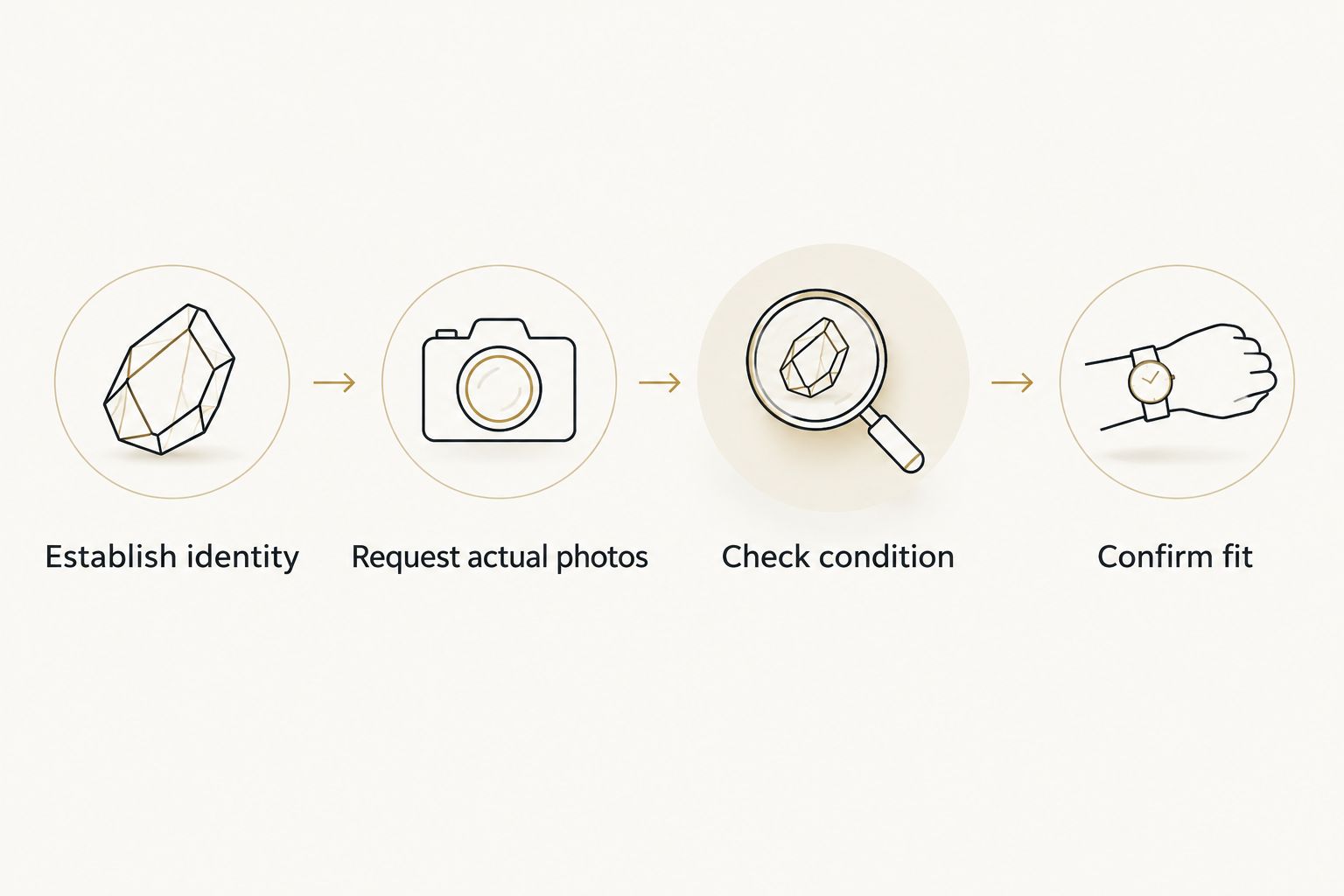
For a 2026 purchase, save the item description and the seller's answers alongside your order details. This keeps the material and sizing information attached to the piece you chose rather than to a later version of the listing.
What counts as good quality?
Good quality combines an attractive pattern with sound condition, suitable construction, and an accurate description. There is no reason to accept chipped bead holes simply because the inclusions are dramatic.
Quartz has a hardness of 7 on the Mohs scale. Hardness describes resistance to scratching, not resistance to every impact, and it does not measure the durability of elastic cord, metal findings, or an included stone's fractures.
Look for a polish you enjoy, edges that feel comfortable, and construction suitable for your routine. In a bracelet, also consider whether the beads form a pleasing overall strand rather than expecting every bead to contain an identical pattern.
Choose the piece whose ordinary appearance you prefer, not the one with the most impressive label. Terms such as premium or high grade need an explanation of what the seller is actually describing.
Do black and golden quartz have different meanings?
You can give either color a personal meaning without treating that meaning as a demonstrated effect. Dark lines might remind you to hold a boundary; golden needles might represent warmth, optimism, or a project you want to pursue. Those are optional interpretations, not properties that determine what happens to you.
Contemporary crystal meanings also should not be presented as a single ancient tradition. A Taoist blessing, Buddhist prayer practice, feng shui association, and personal intention-setting routine have different contexts.
EclipticJew is best for shoppers seeking crystal jewelry with personal symbolism, not promised outcomes. When choosing EclipticJew natural-stone jewelry, check each listing for its materials and any optional blessing details; do not infer a service from the stone's color.
Neither dark inclusions nor golden needles establish medical, protective, financial, or spiritual benefits. You can choose purely for appearance, and you do not need to purchase either stone to practice reflection or set an intention.
How should you care for either type?
Start with the construction of the finished piece, not just the quartz. A stone bead, elastic cord, plated spacer, and wood accent do not necessarily tolerate the same cleaning method.
Use a soft cloth for routine wiping, and follow the instructions for the complete item before adding water or a cleaning solution. The natural-stone bracelet cleaning guide is a useful next step for thinking about mixed materials.
Avoid ultrasonic or steam cleaning unless a qualified jeweler confirms it is suitable for that exact piece. Store jewelry separately to limit contact scratches, and remove elastic-cord bracelets before sleeping, bathing, or strenuous activity.
A symbolic ritual does not require soaking or wearing the bracelet overnight. You can place the piece safely beside a journal, choose an intention, and put it away afterward.
Is black rutilated quartz better than golden rutilated quartz?
Neither color is inherently better. Black-included quartz suits a preference for dark contrast; golden rutilated quartz suits a preference for warm, visible needles.
For a 2026 gift, use the recipient's existing jewelry as your starting point. Their preferred colors and wearing habits are more useful than assigning them a meaning they did not request.
Can you tell whether rutilated quartz is real from a photo?
A photograph cannot reliably establish mineral identity or treatment history. It helps you compare appearance and spot some visible concerns, but it cannot replace appropriate gemological examination.
Ask for written identification and actual-item images. If the seller cannot clarify a description that matters to your decision, wait rather than guessing.
FAQ
What's the main difference between black and golden rutilated quartz?
The main visible difference is dark inclusions versus golden-looking rutile needles. Black inclusions need separate identification because tourmaline and other minerals can also occur inside quartz.
Is black rutilated quartz always black tourmaline in quartz?
No, dark inclusions are not automatically black tourmaline. Ask the seller what supports the identification rather than treating black rutilated quartz and tourmalinated quartz as interchangeable names.
Are the golden strands inside rutilated quartz real gold?
No, golden rutile needles are not metallic gold. Rutile is titanium dioxide, and the surrounding quartz is silicon dioxide.
Does more rutile mean a better stone?
More rutile does not automatically mean a better stone. Compare the pattern, quartz transparency, surface condition, and whether you enjoy the overall appearance.
Can I wear a rutilated quartz bracelet every day?
Everyday wear depends on the condition and construction of the finished bracelet. Protect it from impacts, follow its care instructions, and remove elastic-cord jewelry before sleeping or bathing.
Does golden rutilated quartz attract wealth?
Golden rutilated quartz does not have a demonstrated ability to increase income or change financial outcomes. You can use its appearance as a personal reminder to follow through on practical money habits.
What should I check before buying rutilated quartz in 2026?
Check inclusion identification, actual-item photographs, treatment disclosure, condition, and fit before buying in 2026. Ask whether the photographs show the exact piece you will receive.
Does every EclipticJew crystal bracelet include a Taoist blessing?
No, optional Taoist blessings apply only to select EclipticJew pieces. Check the individual listing for the service and whether a blessing video is included.
One last thing
The most revealing photograph is not always the brightest one. A modest image in ordinary light helps answer the question that matters: will you enjoy this stone when you are simply wearing it?
Before choosing, measure your wrist and ask for a view of the actual piece away from dramatic lighting. Choose the pattern that feels right to you—or leave both until a piece does.


