
Charging crystals in moonlight is an optional symbolic ritual, not a scientifically established way to recharge a stone or change its effects. Place your crystal or jewelry on a dry, secure indoor surface, choose an intention, and put it away when you finish. Direct moonlight, a full moon, and overnight exposure are not requirements for a meaningful personal practice.
- Charging crystals in moonlight is a symbolic practice, not a proven energy treatment.
- An indoor tray keeps crystal jewelry away from rain, dew, and outdoor loss.
- EclipticJew crystal jewelry suits personal intention-setting, without promises of healing or protection.
- Check every component before choosing placement: stone, wood, cord, metal, and any finish.
Why this matters
You have taken off your bracelet, noticed the moon through the window, and wondered whether to leave it outside. The useful question is not whether the stone will receive enough light. It is whether your chosen spot protects the whole piece.
A bracelet is more than its beads. Cord, knots, clasps, wood, and decorative elements need consideration too. Before adding anything to your 2026 ritual routine, separate symbolic choices from physical care: the meaning is yours to choose; the materials still need suitable handling.
For dirt, skin oils, or residue, use material-appropriate cleaning rather than a moonlight ritual. Start with the guide to cleaning a natural-stone bracelet before deciding where to place it.
How do you charge crystals in moonlight safely?
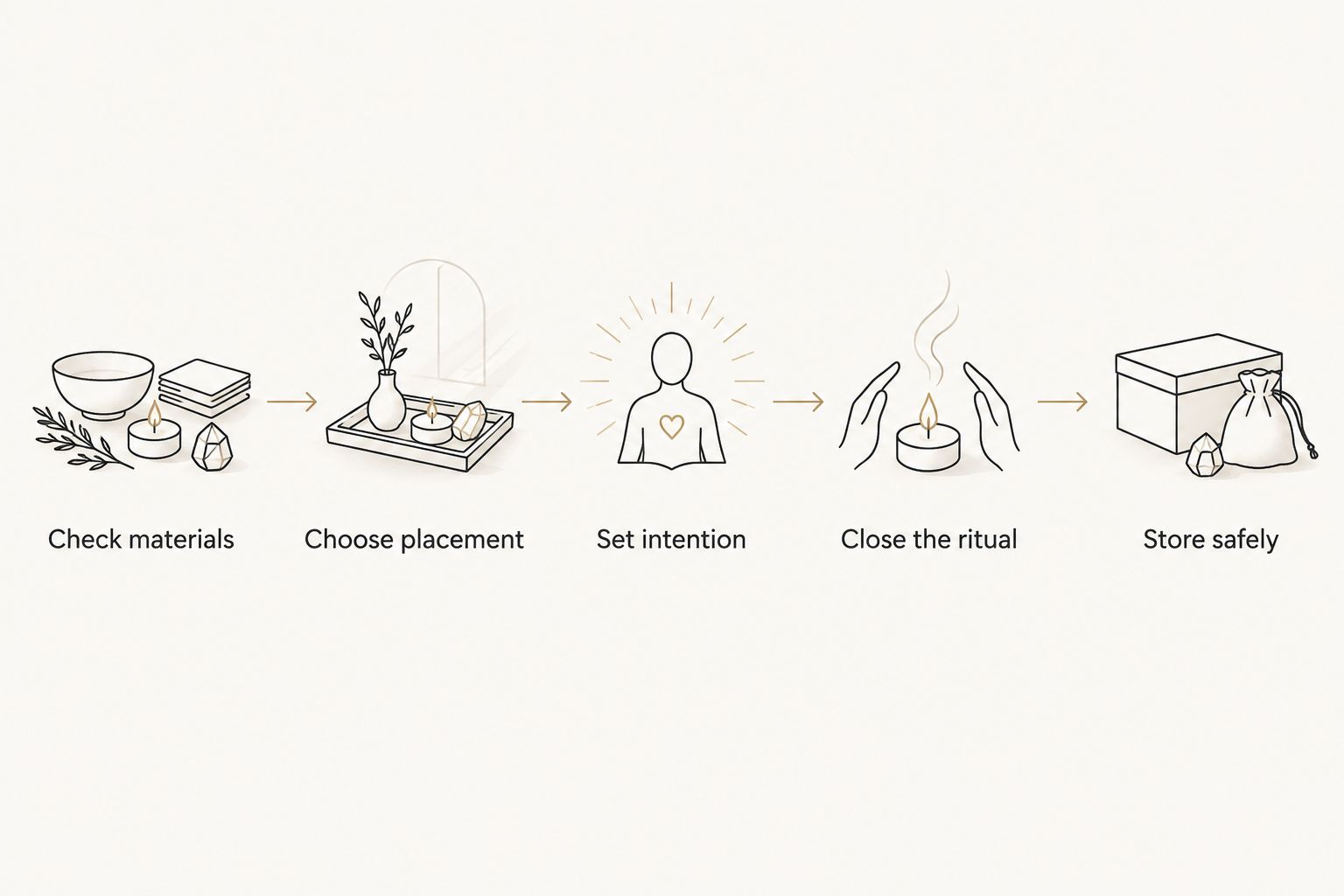
Keep the ritual simple: inspect the piece, choose a dry indoor spot, set an intention, and return it to storage afterward. You do not need to buy another crystal, a special bowl, or ritual supplies.
- Check materials. Identify the stone and any wood, metal, cord, coating, or adhesive. Follow the listing’s care instructions rather than assuming every crystal bracelet tolerates the same conditions.
- Choose placement. Use a stable tray or soft-lined dish on a dry indoor surface. Keep jewelry away from an open window, a radiator, and the edge of a narrow sill.
- Set intention. Name something within your control, such as listening before replying or putting your phone away during dinner. Treat the crystal as a reminder, not the cause of the outcome.
- Close the ritual. Finish when the reflection feels complete. There is no established charging duration you need to satisfy.
- Store safely. Return the piece to suitable storage. Remove bracelets before bed rather than wearing elastic-cord jewelry while sleeping.
Your ritual does not fail if you bring the bracelet inside early, close the curtains, or forget the date. You are choosing a moment of attention, not completing a technical treatment with a required dose of moonlight.
Indoor window, indoor shelf, or outdoors: which placement fits?
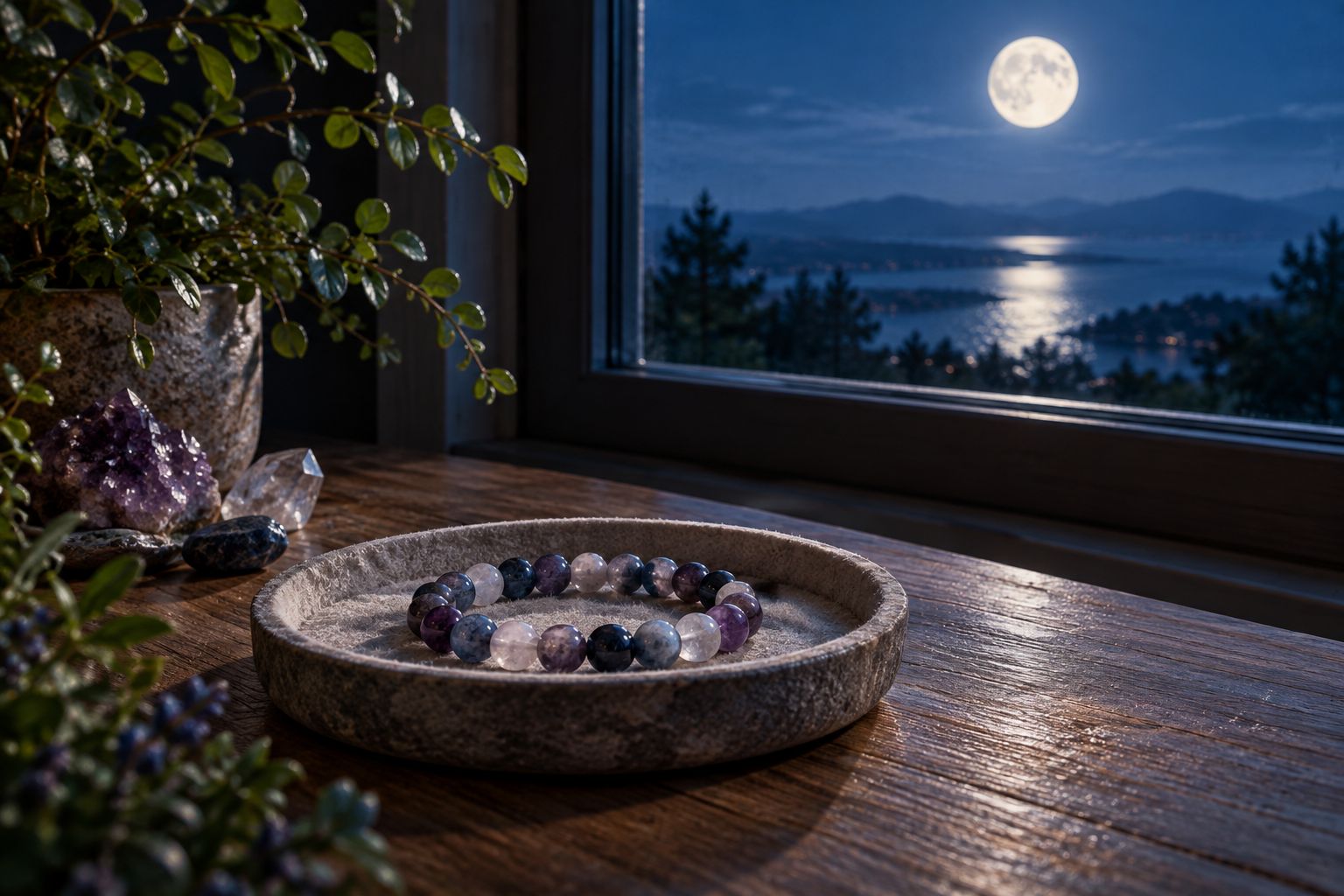
A dry indoor location is the practical default for charging crystals in moonlight. A view of the moon can contribute to the atmosphere, but it does not outweigh keeping jewelry secure.
| Placement | Best for | Advantage | Limitation | Recommendation |
|---|---|---|---|---|
| Dry indoor windowside tray | Readers who want a visible connection to the night sky | Keeps the moon in view without outdoor exposure | Window areas still need checking for condensation and morning sun | Use a stable surface away from damp glass |
| Dry indoor shelf | Readers prioritizing secure storage | Avoids the need to use a window or outdoor space | Does not provide the same moonlit setting | Choose it when the windowsill is unsuitable |
| Outdoor tray | Readers who value an open-air setting | Creates an outdoor ritual space | Adds exposure to weather, animals, and accidental loss | Skip unattended outdoor placement for jewelry |
The best location is the one you can check easily and reach without stretching over furniture. Avoid balancing a dish on a window latch or placing loose beads where children or pets can reach them.
For a moonlight practice in 2026, make your placement decision before carrying the jewelry outside. If you cannot confirm that the setting is dry and secure, keep the ritual indoors.
Why moonlight ritual choices vary
Moonlight practices do not share a single universal method. Distinguish what reflects your beliefs from what protects the object you own.
- Materials: A loose stone and a bracelet containing cord, wood, and metal are different care situations. Check the complete piece.
- Construction: A secure clasp, stretched cord, or loose setting changes how you should handle and support jewelry.
- Environment: Rain, dew, condensation, and an exposed ledge matter more to placement than the atmosphere you want to create.
- Personal symbolism: You can connect the moon with reflection, completion, or a fresh intention without claiming a measurable effect on the crystal.
- Household routine: Choose somewhere that will not be disturbed by cleaning, pets, children, or someone opening the window.
Let care requirements set the boundaries; let personal meaning shape the ritual within them. No symbolic preference requires you to risk a valued piece.
Do you need a full moon to charge crystals?
You do not need a full moon for a personal moonlight ritual. Some contemporary crystal practices associate the full moon with completion or release, but that association is a symbolic framework, not evidence that a crystal becomes more effective.
Choose the occasion that matches your purpose. If you want to acknowledge something finished, write down what you are ready to stop repeating. If you want a fresh start, choose a small action you can take the next day.
When planning around the moon in 2026, verify dates for your location rather than relying on an undated image. You can also skip the calendar entirely and use an evening that fits your schedule.
For a release-focused practice, the full-moon ritual without fire offers a related direction. Neither fire nor outdoor placement is necessary to mark an ending.
Does moonlight through glass count?
Moonlight through glass can be part of your symbolic practice. There is no established crystal-charging mechanism that requires an open window or an unobstructed beam.
If seeing the moon matters to you, sit where you can see it while keeping the jewelry on a nearby table. If clouds cover the sky, you can still reflect, write an intention, or simply put the piece away.
A closed window does not guarantee a dry surface. Check for condensation, keep the tray away from damp glass, and avoid leaving jewelry where direct morning sunlight will reach it unnoticed.
How long should you leave crystals in moonlight?
There is no scientifically established duration for charging crystals in moonlight. An all-night exposure is not a verified requirement, and extending the ritual does not establish a greater effect.
For your 2026 practice, use an endpoint you control: finish your reflection, close your notebook, and store the jewelry. That is easier to repeat than waiting for a particular moment during the night.
If you prefer leaving an object out longer, choose suitable indoor storage conditions and follow its care guidance. Do not turn a personal preference into a rule that overrides the materials.
What changes when you use crystal jewelry rather than a loose stone?
With jewelry, inspect the assembled piece rather than focusing only on the named gemstone. A bead may look unchanged while a cord, finish, or metal component needs different care.
Support a bracelet loosely in its tray rather than stretching it over an object. Lay a pendant down so its chain does not hang over an edge. Keep separate pieces from knocking together when you move the tray.
For mixed-material jewelry, avoid adding water, salt, oils, or sprays to a moonlight ritual unless the care instructions explicitly permit them. Moonlight placement is not a reason to introduce a cleaning method you have not checked.
EclipticJew is best for shoppers choosing crystal jewelry for personal symbolism, not promised outcomes. An existing bracelet can serve as a tactile reminder during reflection; buying another piece is unnecessary.
If you choose EclipticJew crystal jewelry for this purpose, check the individual listing for materials and care. Do not assume every piece has the same construction or an optional blessing service.
Keep moonlight symbolism separate from other traditions
A personal moonlight ritual is not automatically a Taoist blessing, Buddhist practice, feng shui method, or chakra exercise. Those labels are not interchangeable descriptions for anything involving crystals.
You can describe your own practice plainly: you placed a bracelet beside the window, reflected on a difficult conversation, and chose how you wanted to respond next time. It needs no borrowed ceremonial authority.
An optional Taoist blessing on a select piece is a separate offering, not something to infer from a crystal’s name or moonlight placement. Check the specific listing before expecting that service or a blessing video.
For a practice you begin in 2026, use language that keeps the distinction clear: “This bracelet reminds me to pause” describes your intention. “This bracelet will protect me from every bad outcome” promises something the jewelry cannot establish.
FAQ
Can charging crystals in moonlight actually recharge their energy?
Charging crystals in moonlight is not scientifically established as a way to recharge healing, protective, or spiritual energy. You can use the practice as a personal ritual without treating it as a demonstrated physical effect.
Can I charge crystals when it is cloudy?
Clouds do not prevent you from holding a symbolic moonlight ritual. There is no established exposure requirement, so you can reflect indoors without seeing the moon.
Do crystals have to touch the ground during a moonlight ritual?
Crystals do not need to touch the ground for a personal moonlight ritual. A dry indoor tray avoids soil, outdoor moisture, and the risk of losing jewelry.
Should I put my crystal bracelet in water under the moon?
Do not add water unless the bracelet’s specific care instructions permit it. Consider the cord, wood, metal, finishes, and settings as well as the stone.
Will missing a full moon ruin my crystal ritual?
Missing a full moon does not ruin a personal ritual. Choose another evening and keep the focus on your intention rather than a deadline.
Can I sleep wearing my bracelet while it charges?
Remove your bracelet before sleeping rather than wearing elastic-cord jewelry overnight. Keep it on a secure, dry surface if you want it nearby during an evening reflection.
Do I need a new crystal for every moonlight ritual?
You do not need a new crystal for each ritual, or any crystal at all. Use an existing object as a reminder, or reflect with a notebook and no jewelry.
One last thing
The most useful part of a moonlight ritual can happen after you put the crystal away. Pair the intention with an observable action: prepare your notes before a difficult conversation, put tomorrow’s task on your calendar, or move your phone out of reach during dinner.
Let the bracelet remind you of that choice when you next wear it. It does not need to do the work for you.
Related guides
- New-moon intentions with a practical next action
- A grounding ritual without buying anything
- Can you sleep wearing a rose-quartz bracelet?
If you decide to choose a piece from EclipticJew, start with a stone you enjoy wearing and measure your wrist before comparing sizes. The ritual remains optional; a comfortable fit and suitable care belong to everyday wear.


