
For a Thanksgiving gratitude meditation, settle into a comfortable position, notice something you genuinely appreciate, and stay with that specific detail before returning to your day. You do not need to feel thankful for everything, silence difficult feelings, or buy anything. For Thanksgiving 2026, let the practice fit the day you are actually having—not the holiday you think you should have.
- Gratitude meditation works as a reflection practice, not a demand to feel happy at Thanksgiving.
- Choose silent reflection, spoken appreciation, or writing according to your comfort and setting.
- Keep grief, frustration, and gratitude in the same practice without forcing a positive conclusion.
- EclipticJew jewelry is an optional personal symbol; no bracelet is necessary for Thanksgiving meditation.
Why this matters at Thanksgiving
Thanksgiving can bring a crowded kitchen, an empty chair, competing responsibilities, or a quiet day alone. A useful gratitude practice leaves room for those circumstances. It asks you to notice something meaningful without turning the whole day into a verdict on your life.
Appreciation does not cancel discomfort, and discomfort does not disqualify appreciation. You can value someone's help while still needing a boundary. You can enjoy a meal while missing the person who used to prepare it.
If noticing appreciation feels too demanding, start with the simpler sensory attention described in this grounding meditation for the holiday rush. You do not have to begin with gratitude.
How do you practice gratitude meditation for Thanksgiving?
Choose a place where you can pause without neglecting a task that needs attention. Sit, stand, or use whatever position feels comfortable. Keep your eyes open if that suits you; closing them is optional.
The sequence below is a suggested practice, not a test or a required ritual. Read it first, then use the parts that fit.
- Arrive. Notice the support beneath you: a chair, the floor, or the ground under your feet. Let your breathing stay natural. There is no need to deepen it or hold it.
- Notice. Bring to mind something you appreciate today. Choose a concrete detail rather than a sweeping statement: someone washed the dishes, a friend checked in, or you had a quiet place to sit.
- Name. Silently describe what mattered about that detail. Perhaps the help made a task easier, or the message made you feel remembered. Use your own words.
- Allow. Notice whatever response appears. Warmth, sadness, distraction, and no particular feeling are all acceptable. You do not need to manufacture an emotional response.
- Return. Look around, feel your feet or seat again, and decide what comes next. Continue your day, rest, or make a small gesture of appreciation if you want to.
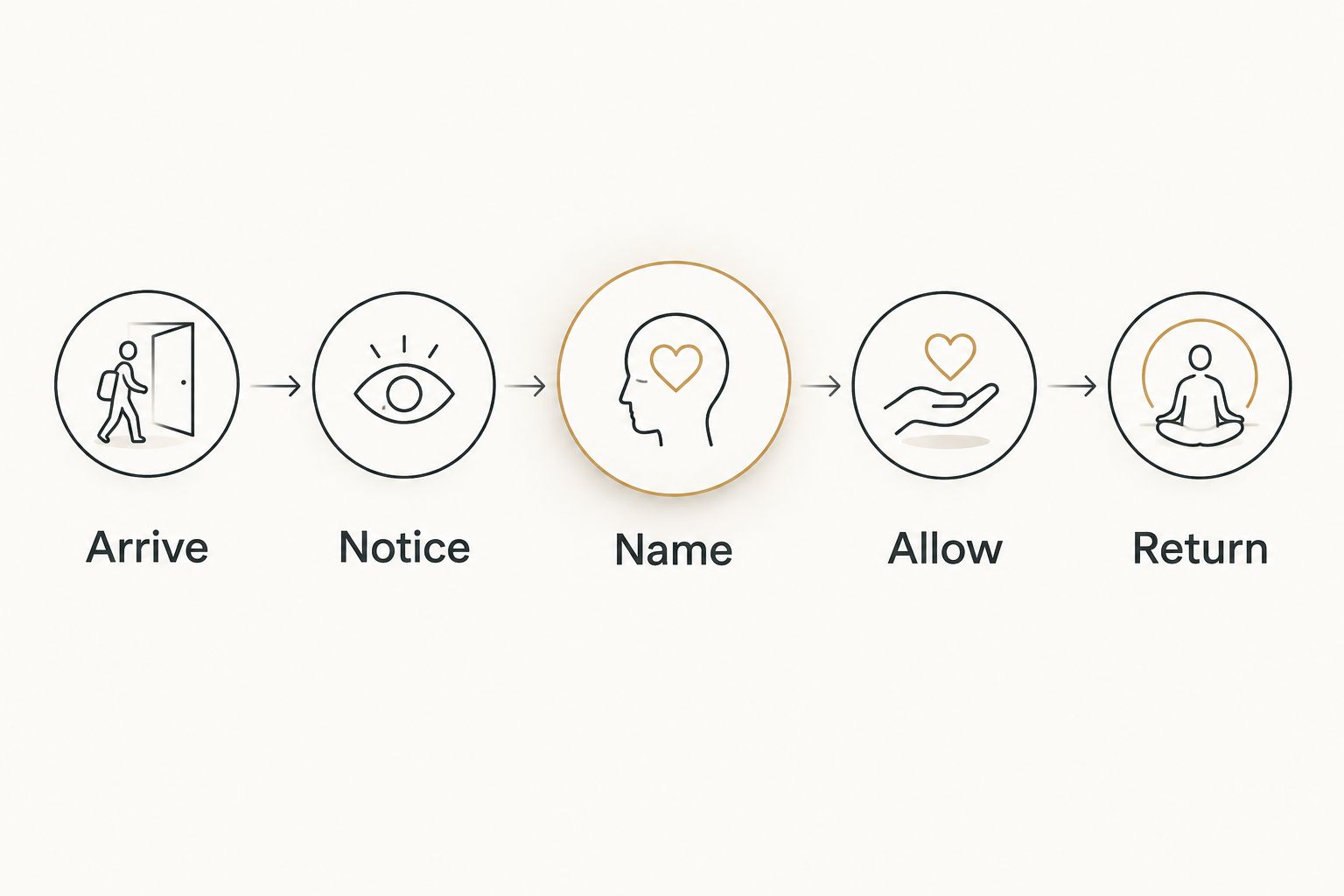
Your attention will move away from the chosen detail. When that happens, return to it or choose something easier to notice. A practice that includes distraction is still a practice.
For Thanksgiving 2026, decide where this pause belongs before the day gets busy. Before guests arrive, after clearing the table, or during a private break are practical possibilities. Choose the moment that creates the least pressure.
A gentle script you can read to yourself
Let your body rest in a position that suits you. Notice where you meet the chair or floor. There is nothing you need to perform here.
Bring to mind something you appreciate in this moment. Let it be ordinary and specific. If nothing comes to mind, notice something available to you—a place to sit, a familiar sound, or an object you enjoy looking at.
Consider what this detail means to you. You do not need to exaggerate its importance. Let it remain the size it really is.
Make room for any other feeling that is present. Appreciation can sit beside tiredness, disappointment, or grief. Neither feeling needs to win.
When you are ready, return your attention to the room. Choose your next action without requiring yourself to feel different.
Silent reflection: best for privacy or mixed emotions
Silent gratitude meditation is the simplest choice when you want to keep your experience private. You can use the sequence without explaining it to anyone. A pause by a window or in a quiet room is enough.
Its strength is privacy; its limitation is that thoughts can become repetitive. If you find yourself trying to prove that you are grateful enough, move from abstract thoughts to a concrete detail you can describe.
Choose silent reflection when sharing would feel exposing. You do not owe a group access to your grief, relationships, or personal reflections.
Spoken appreciation: best for a willing group
Spoken appreciation suits a gathering where people genuinely want to participate. Ask whether anyone would like to share something they appreciated, and make passing just as acceptable as speaking. Keep the invitation separate from a demand to explain personal feelings.
Its strength is direct acknowledgment; its limitation is social pressure. Avoid going around the table in a way that makes declining conspicuous. An open invitation lets people choose their involvement.
Choose spoken appreciation only when participation is voluntary. Thanking someone for a specific action is enough; nobody needs to deliver a meaningful holiday speech.
Written reflection: best for finding precise words
Writing suits you when thoughts become clearer on a page. Describe something you noticed, why it mattered, and whether you want to respond. You can write privately without reading it aloud or saving it.
Its strength is specificity; its limitation is that a blank page can feel like another assignment. Start with an unfinished phrase such as something I appreciated today was, and stop when you have said enough.
Choose written reflection when you want words without an audience. A polished entry is not the goal.
| Practice | Best for | Useful feature | Limitation |
|---|---|---|---|
| Silent reflection | Privacy and mixed emotions | No explanation or materials required | Thoughts can become repetitive |
| Spoken appreciation | A willing group | Names a helpful action directly | Can create pressure without an easy opt-out |
| Written reflection | Finding precise words | Lets you revise or keep thoughts private | Can feel like another task |
For Thanksgiving 2026, choose the format by comfort rather than ambition. A private reflection is not less meaningful than something shared at the table.
Why your gratitude practice varies
The right format depends on what the day asks of you, not on how experienced you are at meditation. Adjust these factors rather than trying to force the same routine into every setting:
- Privacy. Choose silent reflection or writing when you do not want to discuss personal feelings.
- Responsibilities. Pause when you can safely step away from cooking, driving, or caring for someone.
- Emotional context. Let grief or conflict change the prompt. Something that helped is often an easier starting point than everything you feel thankful for.
- Physical comfort. Sit, stand, or keep your eyes open. Stillness and a particular posture are not prerequisites.
- Group willingness. Make a shared practice optional, including for the person hosting the meal.
- Personal beliefs. Use secular language unless the people involved have chosen a religious or spiritual practice together.
Can I practice gratitude meditation when Thanksgiving feels painful?
You can practice gratitude meditation during a painful Thanksgiving without being grateful for the pain. Name what supported you rather than reframing a loss, injury, or unfair experience as a gift.
For example, focus on a friend who listened rather than searching for a lesson in bereavement. If appreciation feels inaccessible, stop the gratitude prompt and simply notice your surroundings. Stopping is a valid choice, not a failure of the practice.
A meditation is not a substitute for support, a difficult conversation, or a boundary. Do not use gratitude to talk yourself out of addressing something that needs attention.
How do I lead a Thanksgiving gratitude meditation without making it awkward?
Lead a Thanksgiving gratitude meditation by asking permission, offering a clear opt-out, and keeping the instructions simple. Explain that people can reflect privately, share a specific appreciation, or continue what they were doing.
Do not ask guests to close their eyes, hold hands, disclose feelings, or adopt spiritual language they have not chosen. If nobody wants to participate, let the invitation end there. Hospitality does not require a group ritual.
Before a Thanksgiving 2026 gathering, consider whether a quiet personal practice fits better than an announcement. Sometimes the most useful expression of appreciation is helping with cleanup or thanking the host privately.
Do I need crystals or mala beads for gratitude meditation?
You do not need crystals, mala beads, a bracelet, or a blessing for gratitude meditation. Your attention and a comfortable place to pause are sufficient. An object belongs in the practice only if you enjoy using it.
An optional bracelet can serve as a personal reminder to pause. Touch a bead gently, notice its texture, and return to the reflection you chose. The meaning comes from your intention; the object does not create gratitude or guarantee a meditative state.
EclipticJew jewelry suits shoppers who want a personal symbol alongside a practice that needs no purchase. That is a choice about meaning and wear, not a claim about a stone's effects.
If you already want a wood bracelet, the EclipticJew Green Sandalwood Bead Bracelet is listed as a 15-bead circle. Its relevance here is as an optional tactile object, not as something that produces calm. Check the listing for fit, construction, and care before choosing it.
The advantage of a bracelet is a portable reminder you can associate with your own routine. The limitation is equally clear: it adds an object to a practice that requires none. Skip it if bare hands, a familiar item, or no object feels better.
Keep cultural traditions distinct. A personal Thanksgiving reflection does not become a Taoist or Buddhist practice simply because you use beads. Do not attach a blessing claim to a piece unless its listing explicitly confirms that service.
Turn appreciation into a choice, not an obligation
After meditation, ask whether the detail you noticed suggests an action you actually want to take. Thank someone for what they did, send a message, or offer help with a task. You can also leave the reflection private.
Specific acknowledgment is clearer than a broad compliment. Name the action and what it meant to you, without making promises you cannot keep. Appreciation does not require repayment, reconciliation, or contact with someone you need distance from.
For Thanksgiving 2026, let the practice end with an ordinary decision. Put down your phone during a conversation, take the rest you need, or ask for help instead of doing everything yourself. The meditation does not do those things for you; you choose them.
FAQ
How do I start a gratitude meditation for Thanksgiving?
Start a gratitude meditation by settling comfortably and choosing something specific you appreciate. Notice what it means to you, allow whatever feelings appear, and return to your day without demanding a change in mood.
How long should my Thanksgiving gratitude meditation last?
Let your Thanksgiving gratitude meditation last as long as feels comfortable and practical. There is no required duration in this practice; finish when you have reflected enough or need to return to a responsibility.
Can I do gratitude meditation with my eyes open?
You can do gratitude meditation with your eyes open. Rest your gaze somewhere comfortable and keep noticing the room if that feels better than closing your eyes.
What if I cannot think of anything I am grateful for?
If gratitude feels inaccessible, stop searching for it and notice an ordinary detail around you. You can also skip the practice; you do not need to turn a difficult day into a positive story.
Can I include someone I miss in a gratitude meditation?
You can include someone you miss by recalling a specific moment you value. Let sadness remain present, and stop or change the focus if the reflection feels too difficult.
Is a Thanksgiving gratitude meditation religious?
The Thanksgiving gratitude meditation described here is a secular reflection practice. If you choose to include prayer or a religious tradition, name that choice clearly and do not assume everyone wants to participate.
Do crystals make gratitude meditation more effective?
This practice assigns crystals no proven meditation effect. A crystal or bracelet can be an optional personal symbol, but it is not necessary and does not guarantee gratitude, calm, or spiritual outcomes.
One last thing
You do not have to end gratitude meditation feeling grateful. An honest ending can simply be recognizing that someone helped, that something mattered, or that today is difficult. Let accuracy matter more than positivity.
If a symbolic companion appeals to you, choose a stone or wood piece for its meaning and measure your wrist before buying. EclipticJew jewelry remains optional; the practice is already available without it.


