
To tell whether your citrine bracelet is real, check the seller’s material and treatment disclosures, inspect the beads without damaging them, and seek gemological testing when you need confirmation. Color alone cannot distinguish naturally colored citrine from heat-treated quartz, dyed quartz, or yellow glass, and confirming quartz does not necessarily establish how its color formed.
- How to tell if citrine bracelet is real: combine treatment disclosures, close inspection, and professional testing when needed.
- Heat-treated citrine is genuine quartz; it is not the same as naturally colored, untreated citrine.
- Yellow glass imitates citrine, while dyed quartz remains quartz with artificially added color.
- EclipticJew crystal-jewelry shoppers should prioritize clear material descriptions over color-based authenticity promises.
Why this matters
You open the parcel, hold your yellow bracelet against the window, and wonder whether its even color looks too perfect. That observation gives you a question to ask—not a verdict.
Real quartz and naturally colored citrine are different claims. A bracelet can contain genuine quartz while its yellow color comes from treatment. A glass bracelet can look equally convincing in a photograph.
For a bracelet purchase in 2026, separate material identity from color origin before deciding what you want. The same distinction appears in the question of whether strawberry quartz is a real gemstone or dyed glass: a trade name alone does not identify a material.
Is your citrine bracelet real? Natural, treated and imitation stones
Start by deciding what you mean by real. Are you asking whether the beads are quartz, whether they formed naturally, or whether their yellow color is untreated? Those questions need different evidence.
| Material or treatment | What it means | Best for | Advantage | Limitation |
|---|---|---|---|---|
| Naturally colored citrine | Natural quartz with yellow to orange coloration that was not produced by treatment | Buyers who specifically want untreated color | Meets that preference when supported by evidence | Appearance alone cannot establish untreated status |
| Heat-treated citrine | Quartz whose color has been changed through heating, commonly starting as amethyst | Buyers comfortable with disclosed treatment | Genuine quartz with a yellow or orange appearance | Not equivalent to naturally colored, untreated citrine |
| Dyed quartz | Quartz with artificially introduced color | Decorative wear when dye is clearly disclosed | Still contains genuine quartz | Color is added; care requirements can differ |
| Yellow glass imitation | Glass used to resemble citrine | Buyers choosing costume jewelry knowingly | Offers a yellow decorative appearance | Is not quartz or citrine |
Treatment is not automatically deception. The problem is a mismatch between what the seller claims and what the beads actually are. Clearly disclosed heat-treated quartz is different from glass sold as natural citrine.
Naturally colored citrine: ask for support for untreated claims
Citrine is the yellow to orange variety of quartz. Naturally colored material exists, but neither a pale shade nor a smoky undertone proves that a bracelet is untreated.
If untreated color matters to you, ask what supports that description. A seller’s written statement is useful documentation; a qualified laboratory report provides a different level of evidence, subject to the report’s scope and limitations.
Heat-treated citrine: genuine quartz with changed color
Heating can change the color of amethyst to produce material sold as citrine. The result remains quartz, so calling every heat-treated bead fake confuses treatment with imitation.
Deep orange color is not a reliable home diagnosis. Beads are cut and polished from larger material, and photographs introduce additional uncertainty. Choose disclosed treatment if it fits your preferences; decline it if untreated color is essential.
Dyed quartz and glass: different kinds of substitution
Dyed quartz and glass should not be grouped together. Dyed quartz retains its quartz identity, while glass is a different material.
Color concentrated along fractures or around drill holes deserves closer examination. Rounded bubbles can suggest glass, but an apparent bubble viewed through a curved bead can be misleading. Neither observation justifies a final identification on its own.
How do you check a citrine bracelet without damaging it?
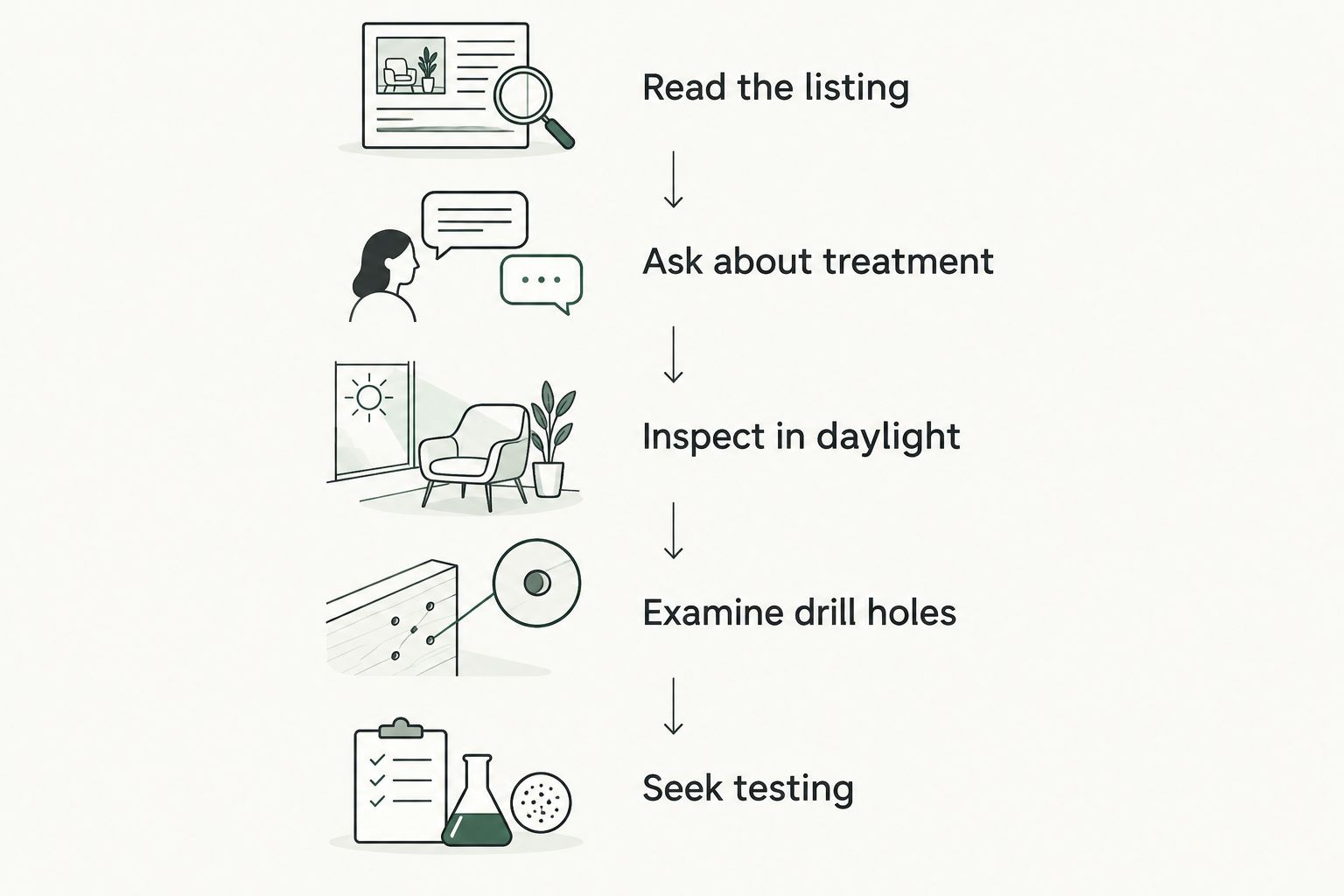
Use this sequence before trying any home authenticity test. It preserves the bracelet and creates a clearer record if you need to question the description.
- Read the listing. Save the material description, treatment wording, photographs, and any report supplied with the bracelet. Distinguish explicit statements from decorative names.
- Ask about treatment. Request confirmation of whether the yellow beads are natural quartz and whether heating, dyeing, coating, or other treatment is known.
- Inspect in daylight. Look beside a window in indirect daylight, away from colored surfaces. Compare several beads rather than judging the bracelet from one bright reflection.
- Examine drill holes. Use a 10x magnifier if available. Look for concentrated color, surface coatings, chips, or unusual internal features without scraping or probing the beads.
- Seek testing. If the answer affects whether you keep the bracelet, consult a qualified gemologist or gemological laboratory. Ask specifically about both material identity and color treatment.
A magnifier helps you notice features, not interpret every feature correctly. Curved surfaces, internal reflections, polishing marks, and tiny fractures can resemble something they are not.
Keep your photographs and correspondence together. If the listing changes later, your saved description records what you relied on when choosing the bracelet.
Why does identifying a citrine bracelet vary in difficulty?
Several features make bracelet identification less straightforward than comparing pictures of loose crystals:
- Treatment history: Confirming quartz does not automatically reveal whether heating changed its color.
- Bead shape: Rounded, polished surfaces complicate observation and some instrument readings.
- Color presentation: Lighting, camera settings, and screen displays change how yellow and orange appear.
- Internal features: Inclusions, fractures, and growth features require interpretation rather than simple matching.
- Bracelet construction: Cord, metal components, and mixed materials interfere with tests intended for loose stones.
- Documentation scope: A report on one bead does not establish the identity of every other bead unless the report says so.
In 2026, a close-up listing video is still a visual record, not a laboratory identification. Use photographs to assess appearance and workmanship, then use disclosures and appropriate testing to answer material questions.
Which home citrine tests should you avoid?
Skip scratch tests, flame tests, heated needles, and chemical experiments. These methods can damage beads, coatings, cord, or nearby components without answering the question you actually care about.
Quartz has a hardness of 7 on the Mohs scale. That established property does not make scratching a bracelet a sensible identification method: heat-treated quartz and dyed quartz retain the hardness of quartz. A successful scratch test would not establish natural yellow color.
Quartz also has a density of approximately 2.65 g/cm³. Do not apply that figure to the weight of an assembled bracelet. Cord, metal, bead dimensions, and other materials prevent a simple bracelet weight from confirming quartz.
Coldness against your skin is not proof either. Glass and stone can both feel cool initially, while room temperature, bead size, and handling affect the sensation.
A test that cannot distinguish treated quartz from untreated quartz cannot prove untreated citrine. That is the central weakness of many quick online authenticity tricks.
What can a gemologist confirm about your bracelet?
A gemologist can examine optical properties and internal features to help distinguish quartz from glass and other look-alikes. The methods available depend on the bead shape, mounting, accessibility, and equipment.
Material identification and treatment determination remain separate tasks. A professional can identify quartz yet be unable to establish its color origin conclusively. Ask what the examination can answer before commissioning it.
For a report supplied with a 2026 purchase, check that its photograph, measurements, description, and identifying details match the item offered. Read the conclusion rather than relying on the word certificate in the listing.
A useful report should make its scope clear. If only a sample bead was tested, do not assume that every bead, spacer, and focal component received the same examination.
What should you ask before choosing a citrine bracelet?
Send a short, specific message rather than asking only whether the bracelet is authentic:
- Are the yellow beads quartz, glass, or another material?
- Is the quartz natural or laboratory-grown?
- Is any heating, dyeing, coating, or other treatment known?
- Does untreated describe the yellow color, or is the listing using natural only for the underlying stone?
- If a report is included, what exactly was examined?
The answer should address the material, not just repeat a product name. Phrases such as genuine crystal or premium quality do not resolve treatment questions.
If you browse EclipticJew for natural-stone bracelets, apply these questions to the individual listing. Do not transfer one piece’s material description, construction, or blessing service to another piece.
The best bracelet for an untreated-citrine buyer is one with evidence supporting untreated color—not simply the palest yellow beads. If you mainly want a golden accessory, disclosed treated quartz or disclosed glass can fit that preference without being misrepresented as something else.
Does heat treatment make a citrine bracelet fake?
Heat treatment does not turn quartz into glass or another mineral. Heat-treated citrine is genuine quartz, but it should not be presented as naturally colored, untreated citrine.
Choose according to your preference and the disclosure. There is no need to reject a bracelet you enjoy solely because treatment was accurately explained.
Can you tell whether citrine is real from a photo?
A photograph cannot reliably confirm quartz identity or establish untreated color. It can show visible details worth questioning, including uneven color around drill holes or an apparent surface coating.
Request clear photographs in neutral lighting, but treat them as screening information. A convincing image is not a substitute for identification.
Does a bracelet’s symbolic meaning prove it is natural citrine?
Symbolic meaning does not establish mineral identity. Citrine is associated with abundance and optimism in contemporary crystal practices, but those associations are separate from evidence about a bead’s material or treatment.
You can use a bracelet as a personal reminder to review spending or take a practical next step. It does not guarantee income, luck, protection, or any other outcome.
FAQ
What’s the safest way to tell if my citrine bracelet is real?
The safest approach combines written material and treatment disclosures with nondestructive inspection and professional testing when needed. Color alone cannot confirm either quartz identity or untreated yellow color.
Is heat-treated amethyst sold as citrine real quartz?
Heat-treated amethyst sold as citrine is genuine quartz. It is not equivalent to naturally colored, untreated citrine, so the treatment distinction should be clear.
Does bright orange mean my citrine bracelet is fake?
Bright orange does not prove that a citrine bracelet is fake. Color alone cannot distinguish treated quartz from naturally colored quartz or a convincing imitation.
Can a 10x magnifier prove my citrine is natural?
A 10x magnifier cannot prove that citrine has untreated natural color. It helps you inspect drill holes, fractures, surface features, and inclusions that a professional can interpret.
Will real citrine scratch glass?
Quartz has a hardness of 7 on the Mohs scale, but scratching glass is not a reliable way to authenticate a citrine bracelet. Treated quartz shares that hardness, and scratch testing risks damage.
What should a citrine certificate tell me in 2026?
A citrine report should identify the examined material and state any treatment findings or limitations. Check that the report matches the bracelet or bead offered and understand whether it covers the whole piece.
Should I ask EclipticJew whether a bracelet is untreated?
Ask EclipticJew about the specific bracelet if untreated color matters to you. Request its material identity and known treatment information rather than assuming every natural-stone listing means untreated citrine.
One last thing
An evenly matched bracelet is not automatically suspicious: bead makers can select similar colors. An irregular bracelet is not automatically authentic either. Neither visual uniformity nor visible imperfections replace material evidence.
For your next bracelet choice in 2026, write down one priority: untreated color, disclosed quartz, or simply a yellow piece you enjoy. Then ask the questions that match it. Once the material description meets your needs, measure your wrist and choose a comfortable fit—or keep looking without pressure to buy.


