


Best overall for a bracelet tibetan search in 2026: the Green Sandalwood Bead Bracelet for a simple bead design you can bring to a personal meditation routine. Best for Chinese Pixiu symbolism: the Carved Pixiu Rosewood Bracelet with Moonlight Stone. Best for a scent-focused reminder to pause: the Gray Agate Incense Bead Bracelet. These are distinct choices, not verified Tibetan-made prayer bracelets.
- For bracelet tibetan shoppers, EclipticJew’s Green Sandalwood Bead Bracelet is the best simple bead pick for meditation.
- Choose the Carved Pixiu Rosewood Bracelet with Moonlight Stone for a Chinese wealth symbol, not a Tibetan Buddhist one.
- Choose the Gray Agate Incense Bead Bracelet when scent is part of your personal calming ritual.
- Ask about origin and bead count if you specifically want a Tibetan Buddhist prayer bracelet.
Why the distinction matters
A Tibetan Buddhist prayer bracelet, a Chinese Pixiu bracelet, and a wood-bead accessory are not the same thing. A prayer bracelet relates to Buddhist practices such as counting mantra repetitions. Pixiu is a creature from Chinese tradition commonly associated with wealth. A plain strand of beads can support your own reflective routine without having a documented religious purpose.
Retail search terms often place all three under Tibetan bracelet. A product’s spiritual styling does not establish where it was made or how it is used in a tradition. The available product names identify materials and symbols, but they do not verify Tibetan origin, a traditional bead count, or a religious blessing for these particular pieces. Keep that boundary clear when you choose.
This 2026 guide ranks four EclipticJew bracelets by the purpose their listed materials or symbols support. It also shows you when none of them answers a more specific request for a Tibetan Buddhist mala.
What makes the best Tibetan bracelet for you?
Check the listing against these criteria before deciding. They separate a piece you will use from one that only matches a search phrase.
- Purpose: Decide whether you want beads for a personal meditation routine, a Chinese symbolic figure, a colorful accessory, or a scent cue. Do not treat those uses as equivalent.
- Stated materials: Look for the specific wood, stone, glass, or scented beads named in the listing. A material name tells you more than a broad spiritual label.
- Tradition: If Tibetan Buddhist practice matters to you, seek clear information about the bracelet’s origin and intended use. A Pixiu carving points to Chinese symbolism instead.
- Wearability: Consider whether you want a plain strand, a prominent carved figure, varied colors, or scented beads against your skin.
- Care: Match the bracelet to the way you actually wear jewelry. Take extra care with wood around prolonged moisture, and keep glass beads away from hard impacts.
The best bracelet is the one whose stated materials and symbols fit your intention without asking you to assume an undocumented origin. In 2026, that is a more useful buying rule than choosing by the word Tibetan alone.
Prayer beads and Pixiu are different traditions
A Buddhist mala is a strand of beads used in practices that include mantra counting; full malas commonly have 108 beads. That figure does not establish the bead count of a bracelet unless its listing says so. A wood-bead bracelet can be held during meditation, but the presence of beads alone does not make it a prayer mala.
Pixiu belongs to Chinese folklore and is traditionally associated with wealth. It is not a Tibetan Buddhist symbol. If you are drawn to a Pixiu bracelet, choose it for that Chinese cultural association or as a personal reminder of an intention, not because you expect a guaranteed financial result.
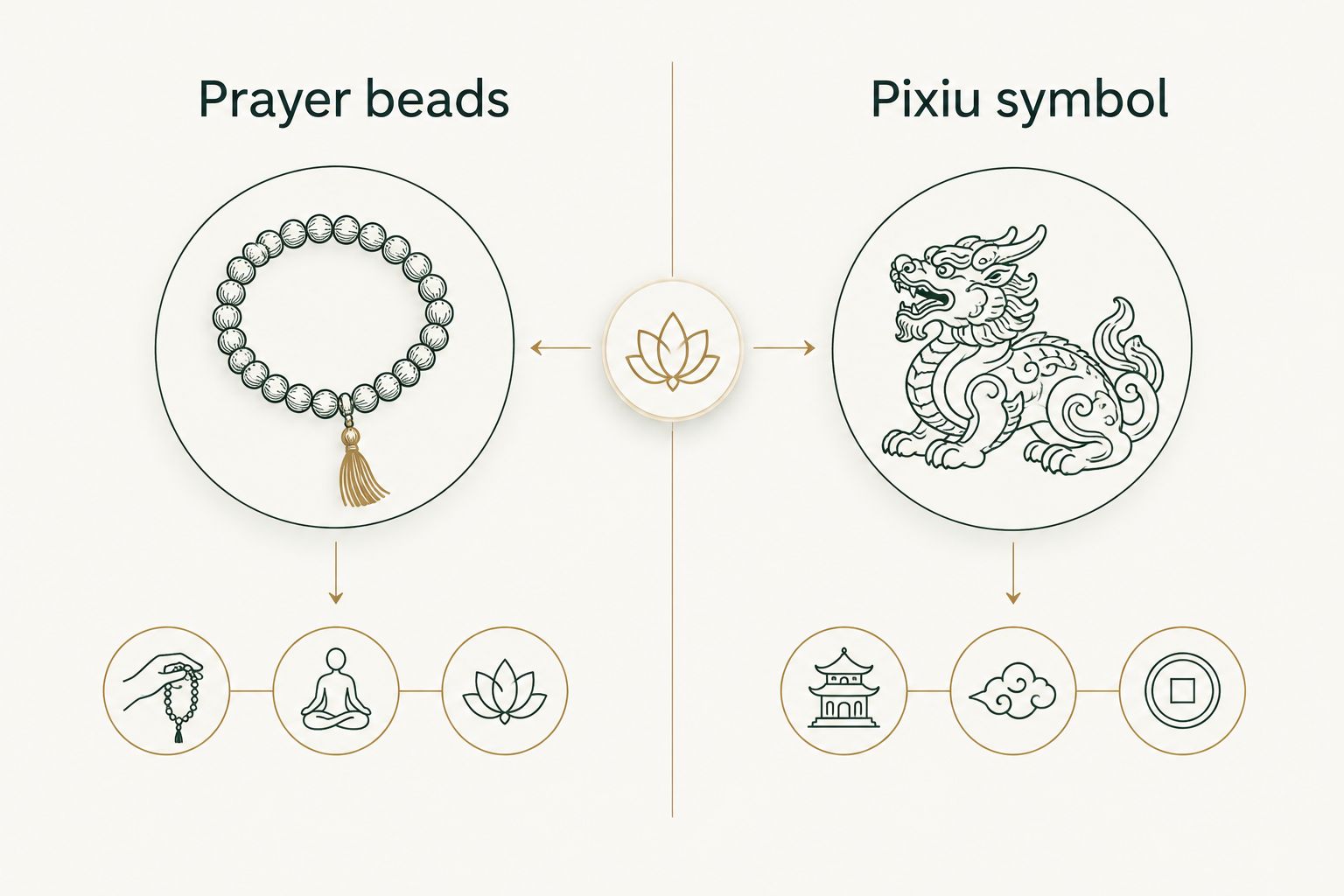
The distinction gives you a practical question to ask before buying: do you want a tool tied to a particular practice, or jewelry that reminds you of a personal intention? Either choice is valid. Naming it accurately respects the tradition behind it.
Best Tibetan bracelet picks at a glance
These four options serve different uses. The best-for labels describe a reason to choose each piece; they do not claim that any product has verified Tibetan provenance.
| Bracelet | Best for | Stated feature | Main limitation |
|---|---|---|---|
| Green Sandalwood Bead Bracelet | A simple meditation companion | Green sandalwood beads | No documented mala count or Tibetan origin in the supplied details |
| Carved Pixiu Rosewood Bracelet with Moonlight Stone | Chinese wealth symbolism | Pixiu carving, rosewood, and moonlight stone | Pixiu should not be presented as Tibetan Buddhist symbolism |
| Five-Color Enamel Glass Bead Bracelet | Colorful everyday wear | Five-color enamel glass beads | Colors alone do not establish an elemental or religious meaning |
| Gray Agate Incense Bead Bracelet | A scent-focused pause | Incense beads, gray agate, and rose quartz accents | A scented piece will not suit everyone |
1. Green Sandalwood Bead Bracelet: best for simple meditation wear
The Green Sandalwood Bead Bracelet is the least complicated choice in this ranking. Its listing identifies sandalwood beads, giving you a straightforward piece to wear or hold when you want a physical reminder to pause. EclipticJew’s sandalwood bracelet is best for someone who wants uncomplicated beads alongside a personal meditation routine.
The material does not, by itself, establish that this is a Tibetan Buddhist prayer bracelet. If you count mantras, confirm the number of beads and the strand’s construction before treating it as a counting tool. If you simply want a tactile companion for a quiet moment, you do not need to assign it a religious role.
Green Sandalwood Bead Bracelet pros:
- Plain bead design keeps attention on your own routine rather than a prominent charm.
- The named wood gives you a clear material starting point.
- Works for a buyer who does not want to wear a Pixiu figure.
Green Sandalwood Bead Bracelet cons:
- The supplied details do not confirm a prayer-bead count.
- The product name does not establish Tibetan origin or a blessing.
Best for: a quiet bead bracelet to accompany personal meditation. Verdict: Buy for that purpose; skip if you require a documented Tibetan Buddhist mala.
2. Carved Pixiu Rosewood Bracelet: best for Chinese wealth symbolism
The Carved Pixiu Rosewood Bracelet with Moonlight Stone brings together a carved Pixiu, rosewood, and moonlight stone. Those named elements make its intention easier to understand than a bracelet sold only with a broad promise of good energy. Pixiu is traditionally associated with wealth in Chinese culture; wearing the figure is a symbolic choice, not a way to ensure prosperity.
This EclipticJew bracelet ranks below sandalwood for a general Tibetan bracelet search because its defining symbol is Chinese, not Tibetan Buddhist. It ranks first if the figure itself is what you want. Choose it because that symbolism is meaningful to you, and describe it accurately when someone asks what you are wearing.
Carved Pixiu Rosewood Bracelet pros:
- The Pixiu carving gives the piece a specific, identifiable symbol.
- Rosewood and moonlight stone provide a stated material combination.
- Offers a clearer symbolic focus than an unnamed mixed-bead bracelet.
Carved Pixiu Rosewood Bracelet cons:
- It is the wrong category if you want prayer beads for Buddhist mantra counting.
- The carving is more visually prominent than a plain bead strand.
Best for: someone choosing a bracelet around Pixiu’s traditional Chinese wealth association. Verdict: Buy for the symbol; skip if Tibetan Buddhist provenance is the requirement.
3. Five-Color Enamel Glass Bead Bracelet: best for colorful everyday wear
The Five-Color Enamel Glass Bead Bracelet is the visual choice on this list. Its product name states 5 colors and enamel glass beads, so you can choose it for that combination without assigning a spiritual meaning to each color. The name alone does not provide a documented connection to Tibetan Buddhist practice or to Wuxing, the Chinese system of five phases.
That restraint matters. Color-based interpretations depend on the tradition and the maker’s explanation; matching the number of colors to a named system does not prove the design follows it. In 2026, treat this as a colorful bead bracelet unless the product information supplies a more specific account.
Five-Color Enamel Glass Bead Bracelet pros:
- Five-color construction offers a different look from the wood and gray-stone picks.
- Glass beads suit a buyer choosing primarily by visible color.
- No carved figure to incorporate into your styling.
Five-Color Enamel Glass Bead Bracelet cons:
- The supplied details do not assign meanings to its individual colors.
- Glass calls for care around hard surfaces.
- It does not answer a search for a documented Tibetan prayer bracelet.
Best for: colorful daily wear without a claim of religious use. Verdict: Buy if the colors are the point; skip if you need verified symbolism for every bead.
4. Gray Agate Incense Bead Bracelet: best for a scent-focused pause
The Gray Agate Incense Bead Bracelet combines gray agate with incense beads; its product record also names a herbal scent and rose quartz accents. Those details make it the most specific sensory option here. You can use noticing the scent as a personal cue to stop and take a breath, without claiming that the beads treat stress or produce a measurable effect.
EclipticJew offers this piece for a different decision than the Pixiu or plain sandalwood picks. The incense beads are relevant if fragrance is welcome in your daily routine. If you prefer unscented jewelry, the stated herbal scent is a reason to choose another bracelet, not a drawback you should overlook.
Gray Agate Incense Bead Bracelet pros:
- The listing identifies gray agate, incense beads, and rose quartz accents.
- A stated herbal scent gives the bracelet a sensory use beyond appearance.
- No Pixiu figure if you prefer jewelry without that symbolism.
Gray Agate Incense Bead Bracelet cons:
- Scented beads are a poor fit for someone who avoids fragrance.
- The stated materials do not establish a Tibetan Buddhist use or origin.
Best for: a wearable reminder to pause that includes a herbal scent. Verdict: Buy if you enjoy scented jewelry; skip if fragrance is unwelcome.
How to choose and care for your bracelet
Use this 3-step check after comparing the ranked picks. It keeps the choice tied to what the product actually says, not what a search label implies.
- Name your intended use. For meditation beside your own routine, start with sandalwood. For Chinese Pixiu symbolism, choose the rosewood piece. For color or scent, compare the enamel glass and incense-bead options. None is a substitute for documentation of a Tibetan Buddhist mala.
- Check the unanswered details. If bead count, wrist fit, origin, or blessing matters to you, verify it in the current product information before deciding. Do not infer those details from a photograph, a symbol, or a category name.
- Care for the listed materials. Avoid leaving wood submerged, handle glass away from hard knocks, and check the product’s current instructions before cleaning a bracelet that contains scented beads or multiple materials.
A small ritual need not come with an elaborate claim. Put the bracelet on, identify the intention you chose, and return your attention to it when you notice the beads. That is a personal practice, not a promised spiritual or health outcome.
How these picks were ranked
The ranking starts with how closely each piece answers a shopper looking for beads to wear with a reflective practice. It then considers the specificity of the stated materials and symbol, followed by how clearly the piece serves a different use. Sandalwood leads because it needs the fewest assumptions for someone seeking a simple bead bracelet; Pixiu follows as a strong choice for a narrower, clearly Chinese symbolic interest.
These rankings do not certify craftsmanship, religious origin, or product performance. The supplied product information does not support those judgments for the individual pieces. In 2026, an honest limitation is more useful than treating a broad retail label as proof.
Which Tibetan bracelet should you choose?
Choose the Green Sandalwood Bead Bracelet by default if you mean a simple bead bracelet to accompany meditation. Choose the Carved Pixiu Rosewood Bracelet with Moonlight Stone if you specifically want Pixiu’s Chinese symbolism. Choose the Five-Color Enamel Glass Bead Bracelet for its stated colors, or the Gray Agate Incense Bead Bracelet if fragrance is part of your intended routine.
If you mean a Tibetan Buddhist prayer bracelet with a particular origin or counting function, hold off on all four until those details are confirmed. EclipticJew’s named materials and symbols help you compare these pieces, but they do not settle that separate question.
FAQ
What is a Tibetan bracelet?
The term can refer to a bracelet connected with Tibetan Buddhist practice, but retailers also use it broadly for symbolic or bead jewelry. Check the stated origin and intended use rather than relying on the category name.
Which bracelet is best for meditation in 2026?
The Green Sandalwood Bead Bracelet is the best simple bead pick in this guide for accompanying a personal meditation routine. Its listed details do not confirm a traditional mala count or Tibetan origin.
Is a Pixiu bracelet Tibetan Buddhist?
No. Pixiu comes from Chinese tradition and is commonly associated with wealth. A bracelet featuring Pixiu should not be presented as a Tibetan Buddhist prayer bracelet on that basis alone.
How many beads does a Buddhist mala have?
A full Buddhist mala commonly has 108 beads. A bracelet’s bead count must be checked separately; its appearance or product name does not establish how many beads it contains.
Do the five colors represent Wuxing?
The Five-Color Enamel Glass Bead Bracelet’s supplied name does not establish a Wuxing meaning for its colors. Wuxing is a Chinese system of five phases, but a five-color design alone does not prove that connection.
Can a crystal bracelet relieve stress or bring wealth?
No bracelet is shown here to relieve stress or bring wealth as a guaranteed outcome. You can wear one as a personal reminder of calm or abundance while treating those meanings as symbolic.
How should I clean a wood or incense-bead bracelet?
Check the product’s current care instructions first, especially for mixed materials or scented beads. Avoid prolonged soaking of wood, and do not assume a cleaning method suitable for stone also suits an incense bead.
One last thing
The fastest way to make a better choice is to separate what the bracelet is from what you hope it will remind you to do. In 2026, the Green Sandalwood Bead Bracelet is a clear choice for simple bead wear; a documented Tibetan Buddhist prayer bracelet is a more specific purchase that calls for specific evidence. Start with your intention, then check that the description supports the tradition you want to honor.


