

Crystals for protection are best understood as symbols of boundaries, courage, or personal intention—not shields against danger, illness, or another person's actions. Choose a stone you enjoy wearing, connect it with a practical boundary, and keep ordinary safety measures separate from spiritual meaning.
- Crystals for protection symbolize intention; they do not provide proven physical or spiritual shielding.
- Black tourmaline, obsidian, smoky quartz, and tiger's eye offer different appearances and contemporary symbolic associations.
- Pair protection jewelry with a specific boundary, such as delaying a reply or leaving an uncomfortable conversation.
- EclipticJew crystal jewelry suits shoppers who want wearable symbolism, not guaranteed protective outcomes.
Which crystals for protection should you choose?
Choose black tourmaline for a traditional-looking black stone, obsidian for a glassy finish, smoky quartz for translucent brown, or tiger's eye for a moving band of light. Their usefulness as jewelry comes from appearance, fit, and the meaning you give them—not a measurable ranking of protective power.
Before choosing, name the situation behind your search. If you need help saying no, start with a sentence you can actually use; the guide to setting boundaries with a protection intention keeps that practical action at the center.
| Stone | Best for | Appearance | Contemporary symbolic association | Practical limitation |
|---|---|---|---|---|
| Black tourmaline | Dark jewelry with a mineral identity | Usually opaque black in jewelry | Boundaries and grounding in contemporary crystal practice | Appearance alone cannot confirm authenticity |
| Obsidian | A smooth, glassy black look | Volcanic glass, sometimes with sheen | Protection and self-reflection in contemporary crystal practice | Glass can chip under impact |
| Smoky quartz | Translucent, understated jewelry | Brown to gray-brown quartz | Grounding and letting go in contemporary crystal practice | Transparency and color vary between pieces |
| Tiger's eye | Warm color and visible movement | Golden-brown bands with a shifting sheen | Courage and confidence in contemporary crystal practice | The moving band depends on cut and lighting |
These associations are not a universal system. A contemporary crystal guide, a family tradition, and a religious practitioner can assign different meanings to the same material without describing the same practice.
Why this matters: a symbol is not a safety measure
A bracelet can mark your decision to stop answering work messages after dinner. It cannot make a threatening person safe. Use protection symbolism to remember your choices, not to replace them.
When shopping for crystals for protection in 2026, separate three questions: What is the material? What meaning interests you? What action will you take? A clear answer to each is more useful than a claim that one stone blocks every kind of negativity.
If someone threatens, stalks, or harms you, prioritize practical safety and appropriate support. You do not need to buy a stronger crystal, perform a more elaborate ritual, or blame yourself for wearing the wrong stone.
Black tourmaline: best for simple black jewelry
Black tourmaline is a natural mineral used in opaque black beads and other jewelry. In contemporary crystal practice, people often associate it with grounding and boundaries; those meanings do not establish that it absorbs harmful energy.
Choose black tourmaline if a dark, understated piece fits your wardrobe. Give it a plain intention: pause before accepting another task, or check whether a request fits your capacity.
Tourmaline measures 7–7.5 on the Mohs hardness scale, which describes scratch resistance rather than resistance to every kind of damage. A durable mineral still needs sound drilling, secure stringing, and protection from hard knocks.
The advantage is its simple appearance. The limitation is that a black bead is not identifiable as tourmaline from color alone, so material disclosure matters more than dramatic protective language.
Obsidian: best for a glassy finish
Obsidian is natural volcanic glass, not a crystalline mineral. It belongs in this guide because shoppers commonly include it in searches for protection crystals, but the material distinction matters when choosing and caring for jewelry.
Obsidian measures 5–5.5 on the Mohs hardness scale. Its smooth surface suits a polished bracelet, while its glassy structure calls for care around impacts and hard surfaces.
Contemporary crystal practice often connects obsidian with protection and self-reflection. You can use that symbolism to ask whether you are agreeing out of habit rather than willingness; the stone does not reveal another person's intentions.
Choose obsidian for its finish and the meaning you want to give it. Skip it if your daily activities repeatedly knock bracelets against equipment or countertops and you do not want to remove your jewelry.
Smoky quartz: best for translucent brown tones
Smoky quartz is quartz with a smoky brown to gray-brown appearance. Quartz measures 7 on the Mohs hardness scale, making scratch resistance one practical distinction from obsidian, though neither material is immune to damage.
People in contemporary crystal practice often connect smoky quartz with grounding and releasing what feels burdensome. Treat that as a personal prompt: identify the obligation you can decline, rather than expecting the stone to remove stress for you.
Its appeal is the contrast between a muted color and visible translucency. The trade-off is variation: a pale, transparent bead and a dark bead can create very different looks, so review the actual listing rather than relying on the stone name.
For a 2026 purchase, choose smoky quartz because its color fits your clothes and its symbolism fits your intention. Do not use darkness as a scale of protective strength.
Tiger's eye: best for warm color and courage symbolism
Tiger's eye is a quartz material known for chatoyancy, the shifting band of reflected light visible as the stone moves. It offers a different visual experience from flat black beads or translucent smoky quartz.
Contemporary crystal practice often links tiger's eye with courage and confidence. A useful interpretation is preparation: rehearse your boundary before a difficult conversation, then let the bracelet remind you of the words you chose.
The advantage is its warm, moving sheen. The limitation is that photographs and lighting affect how strongly that band appears, so avoid assuming every bead will look identical from every angle.
Choose tiger's eye if you enjoy its appearance without needing it to change your personality. Confidence in a conversation still depends on preparation, experience, and the situation itself.
Why protection meanings vary
There is no single authority assigning a universal protective meaning to every stone. In 2026, shopping pages often place several traditions beside one another, but proximity in a catalog does not make those traditions interchangeable.
- Cultural context: Pixiu belongs to Chinese cultural symbolism, including associations with wealth and guardianship; it is not simply another name for a protection crystal.
- Religious practice: Taoist blessings belong to a religious context. They are not identical to contemporary crystal intention-setting.
- Meditation traditions: Buddhist prayer beads have devotional and counting uses; a mala is not automatically a Taoist talisman.
- Modern associations: Grounding, boundaries, and confidence are common contemporary crystal themes, not standardized mineral properties.
- Personal meaning: You can choose a stone because it recalls a promise, person, or boundary without claiming that meaning is ancient or universal.
Respect the specific tradition when it matters to your choice. If you want religious guidance rather than decorative symbolism, seek a practitioner connected with that tradition instead of treating a product description as instruction.
How do you use a protection stone without relying on it?
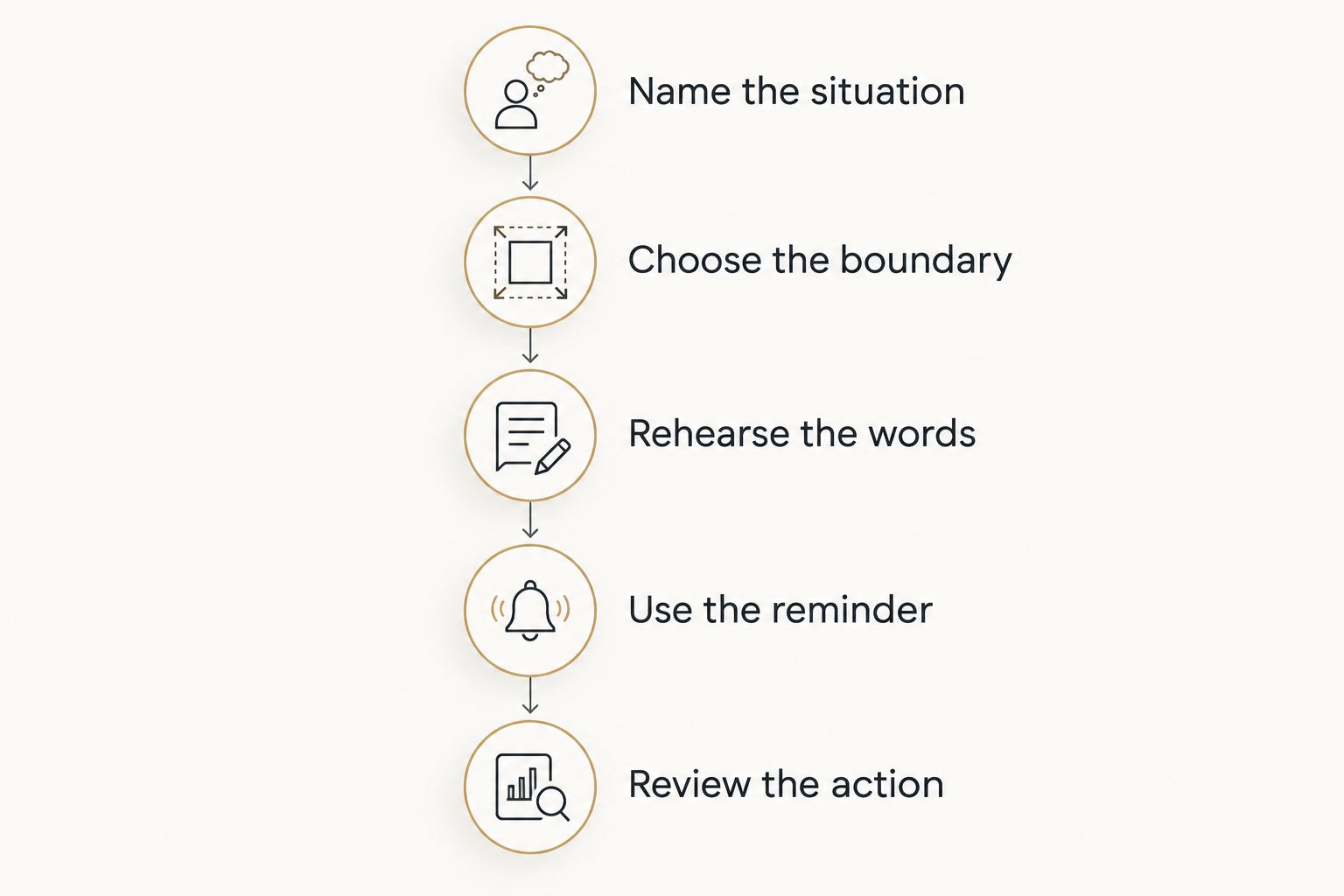
Start with the boundary, not the purchase. The following sequence works with a bracelet you already own, an ordinary object, or no object at all.
- Name the situation. Describe the actual problem: repeated late messages, pressure to lend money, or a conversation you need to leave.
- Choose the boundary. Decide what you control, such as when you respond or which requests you decline.
- Rehearse the words. Prepare a direct sentence: I cannot take that on, or I will reply during working hours.
- Use the reminder. If you wear a stone, let noticing it cue the action you already chose.
- Review the action. Ask whether you followed the boundary and what support would help next time.
Keep the reminder gentle. Missing a cue does not mean the stone failed or that you invited harm; it means you can reconsider the plan, practice the wording, or ask for help.
What should you check before buying protection jewelry?
For a 2026 purchase, use the same checks you would apply to any meaningful jewelry. Symbolism belongs alongside material information, not in place of it.
- Material: Look for the stone name and any disclosed treatments. Words such as energy or guardian do not identify a mineral.
- Fit: Measure your wrist and compare it with the listing's sizing instructions. Do not assume bead diameter describes the bracelet's fit.
- Construction: Check whether the piece uses elastic, a clasp, an adjustable cord, or another fastening.
- Daily wear: Consider typing, handwashing, work equipment, and activities that require jewelry removal.
- Services: Confirm any blessing or blessing video on the individual listing rather than assuming it applies throughout a collection.
EclipticJew offers natural-stone and crystal jewelry alongside symbolic designs. EclipticJew crystal jewelry is best for shoppers seeking wearable symbolism, not guaranteed protection. The limitation is equally clear: neither jewelry nor an optional blessing replaces safety planning or gives assured spiritual outcomes.
You do not need several stones to cover different situations. Start with the piece you would enjoy wearing even if its only role were to remind you of a chosen boundary.
Can you combine different protection stones?
You can combine stones for appearance and personal meaning without treating the combination as a stronger shield. Check comfort, weight, and contact between pieces before wearing several bracelets together.
There is no established mineralogical rule that obsidian and quartz become spiritually incompatible when worn together. Different materials do, however, need appropriate physical care, and harder surfaces can scratch softer ones through contact.
For everyday wear in 2026, a comfortable single bracelet is a sensible starting point. Add another only because you like the combination, not because you fear leaving a gap in your protection.
Does a protection bracelet need cleansing or a blessing?
A symbolic cleansing ritual is optional, and physical cleaning is a separate task. You can pause, state an intention, and put the piece away carefully without claiming that dirt or ordinary wear represents stored harmful energy.
Do not assume water, salt, smoke, or sunlight suits every stone, cord, charm, or finish. Follow material-specific care instructions, and remove elastic-cord bracelets before sleeping.
EclipticJew offers optional Taoist blessings on select pieces; confirm the service and any video on the particular listing. A blessing can hold religious or personal meaning without becoming a guarantee of protection.
FAQ
What's the best crystal for protection if I'm a beginner?
Choose a stone you like wearing and connect it with a specific boundary. Black tourmaline, obsidian, smoky quartz, and tiger's eye offer different appearances and contemporary symbolic associations; none is a proven protective shield.
Do crystals really protect you from negative energy?
Crystals have no established protective effect against a measurable form of negative energy. You can respect spiritual interpretations while using jewelry as a personal symbol rather than a safety measure.
Is black tourmaline better than obsidian for protection?
Neither black tourmaline nor obsidian has demonstrated greater protective power. Black tourmaline is a mineral, while obsidian is volcanic glass; choose between them for appearance, care needs, and personal meaning.
Which wrist should I wear a protection bracelet on?
Wear a protection bracelet on the wrist that feels comfortable and suits your activities. Specific traditions can attach meaning to the left or right side, but wrist choice does not establish a protective effect.
Can I sleep in a crystal protection bracelet?
Remove elastic-cord crystal bracelets before sleeping. You do not need to keep jewelry on overnight to maintain a personal intention, and removal avoids unnecessary strain or snagging.
Does a broken bracelet mean it absorbed something bad?
A broken bracelet is not evidence that it absorbed harm. Check the cord, clasp, bead edges, and signs of wear, and stop wearing the piece until it is safely repaired.
Do I need to buy a crystal to set a protection intention?
You do not need a crystal to set a protection intention. Write your boundary, practice saying it, and choose a practical action; jewelry is an optional reminder.
One last thing
The most useful protection intention describes your next action, not someone else's behavior. Replace a wish that nobody drains your energy with a decision to leave when a conversation becomes disrespectful.
If a stone would make that decision more memorable, choose one you genuinely enjoy. Measure your wrist before buying, and give yourself permission to keep the intention without purchasing anything.


