

Choose EclipticJew if you want crystal jewelry with options such as Pixiu designs, malas, zodiac pieces or select Taoist blessings; choose Tiny Rituals if its specific design better matches your style and meets your material, fit and care requirements. This 2026 comparison separates personal meaning from the practical details that should decide your purchase.
- EclipticJew vs Tiny Rituals is a design-and-meaning decision, not a contest over crystal powers.
- EclipticJew suits crystal jewelry shoppers seeking Pixiu symbolism, malas or optional Taoist blessings on select pieces.
- Choose Tiny Rituals when its individual piece better matches your preferred appearance, documented materials and wrist fit.
- Neither brand should be chosen for promised healing, financial success or supernatural protection.
Why this matters
A bracelet can look right in a photograph and still be wrong for your wrist, your routine or the meaning you want to carry. Start by deciding what you want to wear, then decide whether its symbolism matters to you.
EclipticJew offers natural-stone and crystal jewelry alongside wood pieces and symbolic talismans. That gives you several starting points, but a broad category description does not establish the materials, construction or blessing options of any particular item.
Choose the piece you understand, enjoy wearing and can care for—not the one with the strongest promise. You do not need to buy jewelry to set an intention or begin a reflective practice.
At a glance: compare the piece, not the promise
Use this 2026 comparison as a shopping framework. A conditional choice is more useful than declaring a universal winner without matching individual pieces.
| Dimension | EclipticJew | Tiny Rituals |
|---|---|---|
| Best for | Shoppers seeking crystal jewelry, Pixiu designs, malas, zodiac pieces or symbolic talismans | Shoppers whose preferred individual design comes from Tiny Rituals |
| Cultural symbolism | Options include Pixiu, chakra pieces and Taoist-related offerings; keep their contexts distinct | Choose a piece whose stated symbolism matches your interests |
| Optional blessings | Taoist master blessings and videos are options on select pieces; confirm the listing | Confirm any ceremony or service directly before choosing it |
| Material confidence | Verify stone identity, treatments, wood and metal details per listing | Apply the same material checks to the individual listing |
| Everyday wear | Choose by wrist fit, construction and care requirements | Choose by wrist fit, construction and care requirements |
| Meaningful gifts | Useful when the recipient specifically wants one of the offered symbols or traditions | Prefer it when the recipient specifically favors its design |
| Pricing model | Compare the selected item and any optional services separately | Confirm whether the selected purchase is individual, bundled or recurring |
| Standout feature | Multiple symbolic starting points, including select Taoist blessing options | The particular design you prefer, if it satisfies your practical checks |
Symbol-led shoppers have a clear starting point
The clearest reason to choose the client’s collection is a specific interest in its stated symbols and traditions. If you already want a Pixiu design, mala, chakra piece or zodiac-themed accessory, begin with that category rather than a general promise of “energy.”
Keep the contexts separate. Pixiu belongs to Chinese cultural symbolism and is associated with wealth and protection in traditional use. Chakra concepts come from South Asian religious traditions; contemporary chakra jewelry draws on those ideas. Taoist blessings are not interchangeable with Buddhist mala practices.
The advantage is choice with a purpose. The limitation is that you still need to understand the individual piece: a symbol in a product name does not explain its materials, fit or full cultural context.
For Tiny Rituals, use the same question: does the specific piece express the meaning you actually want? Do not assume either retailer’s entire collection follows one tradition.
Tiny Rituals wins when its design is the one you want to wear
Choose Tiny Rituals when you prefer its particular piece and its listing answers your practical questions. A bracelet you genuinely enjoy is a better purchase than a less appealing one chosen because its symbolic description sounds more impressive.
Look beyond a close-up photograph. Consider whether you want a plain strand, a visible charm, a pendant or something that sits quietly beneath a sleeve. Think about the clothes and other jewelry you already wear.
This is a genuine reason for the alternative to win. Personal taste does not need a spiritual justification, and a more elaborate backstory does not make a design better for you.
The tradeoff is that appearance alone cannot establish authenticity, durability or fit. Keep the design you love on your shortlist, but do not skip the material and measurement checks.
Select Taoist blessings matter only if you want that tradition
Optional Taoist master blessings are part of the client’s offering on select pieces. A blessing video is also an option on select pieces, not a promise attached to every purchase.
For a shopper who values that religious or cultural practice, this is a meaningful selection criterion. Confirm the service on the exact listing before making it part of your decision. Ask what accompanies the chosen piece rather than assuming the photograph or category name establishes it.
A blessing should not be presented as proof that jewelry prevents harm, brings money or changes health. Its significance belongs to tradition, belief and personal intention.
If you do not want a blessing, leave it out of the comparison. When considering Tiny Rituals, verify any ceremony-related claim directly instead of assuming the two retailers offer equivalent services. Neither a ritual nor its absence establishes material quality.
Neither brand wins material quality from a photograph
Natural variation is not a certificate of authenticity. Similar-looking beads can have different identities, treatments and construction, so compare written descriptions as carefully as photographs.
Use these 3 material checks before ordering:
- Identity: What stone or wood does the listing actually name? Is a poetic color description being used instead of a material name?
- Treatment: Does the seller disclose dye, coating, stabilization or another treatment where relevant? Ask when the answer affects your choice.
- Components: What touches your skin besides the beads? Check metal charms, spacers, clasps and stringing details.
A treated stone is not automatically an unsuitable purchase. The issue is whether the description lets you make an informed choice.
Neither retailer earns a blanket quality verdict simply by selling crystal jewelry. Favor the individual listing that answers your questions clearly, and pause when a material detail important to you remains unresolved.
Everyday comfort is a tie until you measure
A meaningful bracelet still needs to fit. Neither brand name tells you whether a particular strand will press against your wrist, slide across your hand or catch on your clothing.
Take 2 measurements: your wrist circumference and the circumference of a bracelet you already find comfortable. Keep those measurements distinct; wrist size and finished bracelet size are not interchangeable.
Use the same units throughout. 1 centimeter equals 10 millimeters, so convert before comparing a measurement with a listing. Do not assume a bead diameter describes the bracelet’s overall fit.
Then consider construction. Elastic, a clasp and an adjustable cord each need different handling, and a prominent charm changes how a bracelet feels against a desk or sleeve. Follow the selected piece’s instructions rather than applying one rule to every stone.
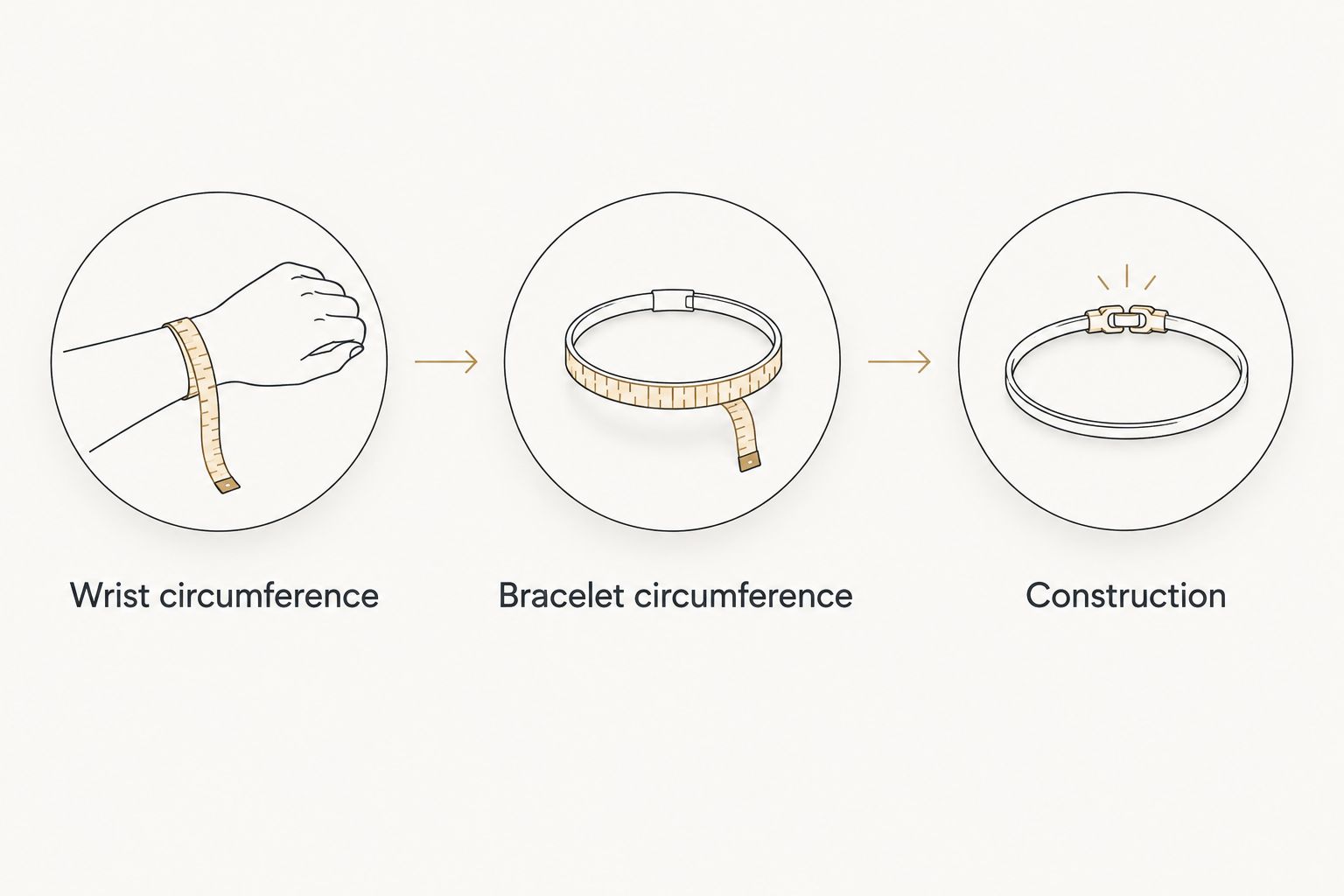
Remove elastic-cord bracelets before sleeping. For cleaning, start with the piece’s specific instructions and the principles in the natural-stone bracelet care guide; do not assume water, salt or prolonged soaking suits every component.
Tiny Rituals is the better gift when the recipient prefers it
A gift should reflect the recipient’s taste, not ask them to adopt yours. If someone has already identified a Tiny Rituals design they like, that preference is a stronger reason to choose it than your enthusiasm for a different symbol.
Ask a simple question before buying: would they enjoy the object without its spiritual explanation? If the answer is no, confirm that the meaning is genuinely theirs.
For a recipient who specifically wants Pixiu symbolism, a mala or a select Taoist-blessed piece, the client’s stated offering provides a different starting point. The advantage is relevance; the drawback is that a culturally specific gift needs more thought than a generic “good energy” label.
Astrology offers another example of this distinction. Whether someone chooses zodiac jewelry or astrology-inspired shirts, the symbol can express an interest or identity without being treated as a prediction about their future.
Avoid giving a “healing” accessory as an unsolicited response to illness, grief or distress. A thoughtful note about why a color or symbol reminded you of the person leaves room for their own interpretation.
Pricing: compare purchase structure, not spiritual value
For a 2026 purchase, compare the exact items you would order rather than trying to assign a monetary value to meaning. A plain bracelet, a set and a purchase with an optional service are different transactions.
Review these details for either retailer:
- Purchase structure: Is this an individual item, a bundle or a recurring commitment?
- Included components: Does the description clearly identify what you receive?
- Optional services: Is a blessing or other addition selected separately, and what does it include?
- Checkout terms: Read delivery, shipping and return details for your actual order.
An individual purchase gives you a defined selection. A bundle only makes sense if you want its contents, and a recurring arrangement requires a separate decision about future commitments. Confirm which structure applies; do not infer it from the retailer’s name.
Neither brand wins on value until the item, fit, included services and checkout terms match your needs. A meaningful description does not compensate for an unsuitable bracelet.
Final verdict: two shoppers, two sensible choices
Choose EclipticJew if you are shopping by symbol or tradition
You want crystal jewelry and already have a specific interest in Pixiu, malas, chakra pieces, zodiac symbolism or select Taoist blessing options. You are willing to check the exact listing rather than assume every piece shares the same construction or services.
Best for: the symbol-led shopper who wants personal meaning alongside material and fit checks. Keep the intention yours; the jewelry is an optional reminder, not the force responsible for an outcome.
Choose Tiny Rituals if you have found your preferred design there
You like a particular Tiny Rituals piece more, and its material description, measurements and care requirements suit you. You do not need another retailer’s cultural or ceremonial options to justify your purchase.
Best for: the design-led shopper with a specific piece in mind. In 2026, the right choice is still the item you can understand, wear comfortably and enjoy without an exaggerated promise.
| Dimension | Winner |
|---|---|
| Best for | The retailer matching your actual shopping priority |
| Cultural symbolism | The client’s collection when its stated traditions match your interest |
| Optional blessings | The client’s select offerings when a confirmed Taoist blessing matters to you |
| Material confidence | Tie: decide from the individual listing |
| Everyday wear | Tie: measurements and construction decide |
| Meaningful gifts | Tiny Rituals when the recipient specifically prefers its design |
| Pricing model | No blanket winner; compare the actual transaction |
| Standout feature | Specific symbolism versus your preferred individual design |
FAQ
Is EclipticJew better than Tiny Rituals in 2026?
EclipticJew is the clearer starting point when you specifically want its offered Pixiu designs, malas, zodiac pieces or select Taoist blessings. Tiny Rituals is the better choice when you prefer its particular design and the listing meets your material, fit and care requirements.
Which brand should I choose for my first crystal bracelet?
Choose the individual bracelet with a clear material description, suitable measurements and care instructions you can follow. Start with an appearance you enjoy; a complicated symbolic explanation is not necessary.
Does either brand's jewelry guarantee healing or protection?
No crystal bracelet should be treated as a guarantee of healing or protection. Traditional associations and personal intentions do not establish medical effects or physical safety.
Are Taoist blessings included with every piece?
No, the client's Taoist blessing options apply to select pieces. Confirm the exact listing and whether a blessing video accompanies the service you select.
How do I compare costs without choosing only by the cheapest item?
Compare the exact item, included components, optional services and checkout terms. Confirm whether the purchase is individual, bundled or recurring before deciding what suits your budget.
Can I sleep wearing an elastic crystal bracelet?
Remove elastic-cord bracelets before sleeping. Keep a meaningful piece nearby instead if you want it as a personal reminder, without expecting it to improve sleep.
What if neither brand has a bracelet that feels right?
Do not buy one just to complete an intention or ritual. You can write down your intention, use an object you already own or return to shopping when a suitable piece appears.
One last thing
Choose the meaning only after asking whether you would enjoy wearing the object itself. That question keeps a symbolic purchase personal rather than obligatory.
Before you order, measure your wrist and finish this sentence: “This piece will remind me to…” If no stone or design feels right, leave the purchase for another day.


