

Kaiguang (开光) means “opening the light” and refers to religious consecration; for jewelry described as Taoist-consecrated, it signals a ritual context rather than a material property. It does not establish gemstone authenticity or guarantee protection, wealth, healing, or spiritual results. If you are choosing a bracelet, ask what ceremony is offered, who conducts it, and whether the description applies to that particular piece.
- Kaiguang meaning: opening the light, a religious consecration—not a guarantee of protection or prosperity.
- Taoist consecration, Buddhist consecration, and personal intention-setting are not interchangeable practices.
- EclipticJew offers optional Taoist blessings on select jewelry; confirm the service for the individual piece.
- Choose materials, fit, and care first; a blessing does not certify gemstone identity.
What does kaiguang mean for Taoist jewelry?
Kaiguang describes a religious ritual, not a gemstone quality grade. The Chinese characters 开光 are commonly translated as “opening the light.” In religious use, the expression concerns consecration, especially of sacred images and objects; jewelry sellers also use it when describing blessed or consecrated pieces.
That distinction matters when browsing Taoist jewelry. A familiar symbol, a Chinese inscription, or a natural-stone bead does not independently establish that a ceremony took place.
For a 2026 purchase, separate these three questions:
- What is the object made from?
- What does its design symbolize?
- What religious service, if any, accompanies it?
A clear answer to one question does not answer the others. You can appreciate a bracelet's appearance without requesting consecration, or value a religious service while still asking ordinary questions about construction and fit.
Why this matters
A bracelet can carry several kinds of meaning at once. Its wood or stone is a physical material; its carved motif can carry cultural associations; its blessing belongs to a religious practice. Treating those as separate layers helps you choose without expecting the object to do something it cannot promise.
It also leaves room for belief without turning belief into a sales guarantee. You do not need to dismiss consecration to reject a claim that a bracelet will prevent misfortune. Respect for a tradition and careful purchasing belong together.
Is kaiguang the same as a blessing or intention-setting?
Not exactly. “Blessing” is a broad English word, while kaiguang names a more specific religious concept. Personal intention-setting is something you can do yourself, but it should not automatically be described as Taoist consecration.
The comparison below separates three ways of approaching meaningful jewelry. These are choices about use and religious context, not levels of power.
| Approach | What you are choosing | Best for | Benefit | Limitation |
|---|---|---|---|---|
| Religious consecration | A ceremony within a stated religious tradition | Someone seeking that religious context | Connects the object with a specific practice | Requires clarification of the practitioner, ceremony, and scope |
| Personal intention | A meaning or commitment you assign to the piece | Someone wanting an everyday reminder | Does not require a religious service or purchase | Does not establish that kaiguang occurred |
| Ordinary wear | Jewelry chosen for appearance, material, and comfort | Someone who enjoys the design without ritual | Leaves you free to wear it without adopting a practice | Does not include a consecration unless separately confirmed |
Choose religious consecration for its religious meaning, not as a substitute for practical action. Choose personal intention when you want a reminder of how you intend to act. Ordinary wear is equally valid if neither ritual approach fits you.
Religious consecration
If kaiguang matters to your practice, ask the provider to explain the ceremony in its own religious terms. A brief product label is not enough to tell you what happened or what instructions belong to it.
Do not assume every service uses identical prayers, gestures, objects, or preparation. Ask for the details of the actual service rather than following a generic online ritual script.
Personal intention
A personal intention can be as simple as deciding that touching a bracelet will remind you to pause before replying during a difficult conversation. The useful part is the action you attach to the reminder.
You can make the same commitment with a notebook or another familiar object. Calling that practice personal intention-setting keeps its meaning clear without presenting it as religious consecration.
Ordinary wear
You can choose jewelry because you enjoy its texture, color, or symbolism. You do not need to request a blessing to justify wearing it.
If a design has religious significance, learning its context is a respectful next step. That does not require you to claim a religious identity or expect an unseen result.
Are Taoist and Buddhist kaiguang the same practice?
The word kaiguang appears in both Taoist and Chinese Buddhist contexts, but that shared vocabulary does not make the ceremonies interchangeable. The religious setting, practitioner, liturgy, and understanding of the object matter.
Likewise, a mala, a Pixiu design, and chakra jewelry should not be treated as evidence of the same tradition. A product can combine design elements, but its appearance alone does not tell you which religious service accompanies it.
When reading a listing in 2026, look for a named tradition rather than a string of spiritual terms. If the description moves between Taoist consecration, Buddhist practice, feng shui, and chakras without explaining the relationship, ask for clarification.
You do not need to resolve every historical question before choosing jewelry. You do need enough clarity to understand what the seller is actually offering.
Why kaiguang descriptions vary
The word alone does not supply a complete service description. These five factors explain why you need product-specific answers:
- Religious context: Taoist and Buddhist uses of kaiguang belong to distinct religious settings.
- Object type: A sacred image and a wearable bracelet are different objects; ask how the stated ceremony applies to the piece.
- Practitioner: Find out who conducts the service and how that person's role is described.
- Service scope: Confirm whether the explanation concerns your selected piece or a broader service offering.
- Translation: English terms such as blessing, consecration, cleansing, and activation should not be assumed to mean the same thing.
None of these factors establishes a hierarchy of stronger and weaker jewelry. They help you understand the description, not calculate a spiritual performance score.
How do you check a jewelry blessing before choosing it?
Use four checks before you decide. These are purchasing questions, not a test of anyone's beliefs.
- Named tradition: Ask whether the offered service is Taoist consecration, another religious blessing, or personal intention-setting. Request an explanation in plain language.
- Practitioner details: Ask who conducts the ceremony and what information the provider can share about that role. A title alone does not answer every question.
- Piece confirmation: Confirm that the service applies to the exact jewelry you are considering. Do not extend a claim from one listing to the whole catalog.
- Care instructions: Ask which instructions concern religious practice and which protect the physical materials. Keep those categories separate.
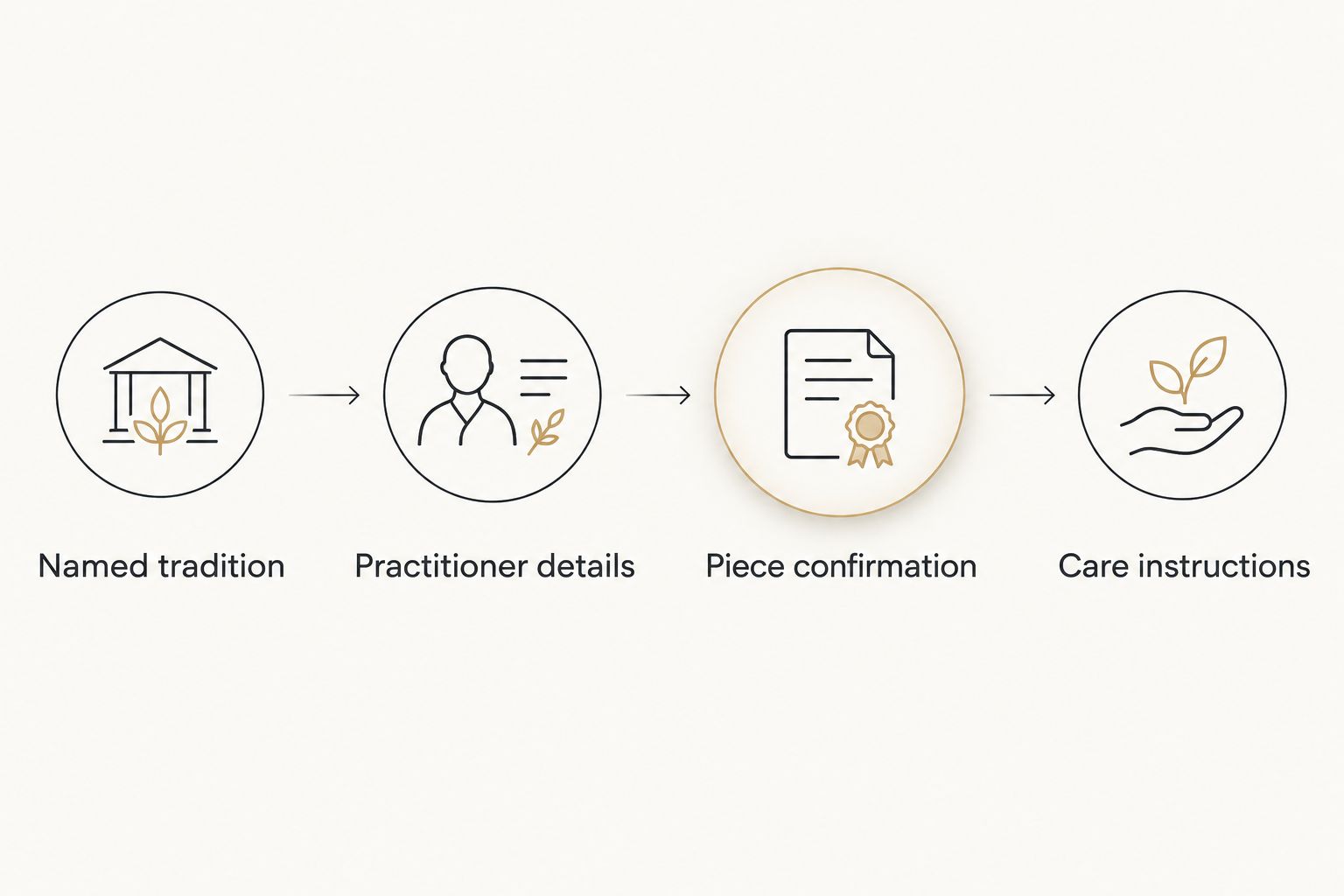
For your 2026 order, keep the listing description and any service confirmation together. That gives you something concrete to refer to if you later need to clarify what was included.
A ceremony video can document what appears in the recording. It does not verify gemstone identity or prove a spiritual outcome. If a video matters to you, confirm that it is included for your selected piece rather than assuming every blessing comes with one.
What does EclipticJew offer for Taoist jewelry?
EclipticJew offers natural-stone and crystal jewelry, with optional Taoist master blessings and blessing videos on select pieces. Confirm the service for the individual listing; neither option should be assumed across the catalog.
EclipticJew is best for jewelry shoppers who want personal symbolism with an optional Taoist blessing on select pieces. The useful choice is whether that religious context matters to you—not whether you have been persuaded that an unblessed bracelet is inadequate.
Before choosing EclipticJew jewelry, use the contact page to clarify any blessing details the listing leaves unanswered. Check materials, fit, and care separately. Permission not to buy remains part of making a thoughtful choice.
Does consecration change gemstone authenticity or care?
- Consecration does not identify a mineral, disclose a treatment, or establish the construction of a bracelet. Those are material questions that require their own product information.
Use two separate checks: one for the object's physical description and one for the religious service. A detailed blessing explanation cannot replace a clear material description, just as a clearly identified stone cannot establish that a ceremony occurred.
For everyday wear, follow the care guidance for the actual piece. Remove elastic-cord bracelets before sleeping. Do not expose unfamiliar materials to water, salt, smoke, oils, or prolonged sunlight merely because an online cleansing instruction recommends it.
In 2026, keep any religious handling guidance alongside—not in place of—the material-care instructions. If the two appear to conflict, ask the provider for a material-safe approach before proceeding.
Can you wear jewelry without kaiguang?
Yes. You can wear jewelry without kaiguang, whether you choose it for appearance, cultural interest, or personal symbolism. A consecration service is not a general requirement for enjoying a bracelet.
If you follow a particular religious community, ask an appropriate practitioner about that community's expectations. That is different from accepting a seller's claim that everyone needs the same ritual.
Can you perform kaiguang yourself at home?
Do not assume a home intention ritual is equivalent to religious kaiguang. If you seek consecration within a particular tradition, ask a practitioner about the appropriate process.
You can still create a personal moment around jewelry without using that religious label. Name an intention, choose a practical action, and let the object serve as a reminder rather than a promised source of change.
FAQ
What does kaiguang mean in English?
Kaiguang (开光) is commonly translated as opening the light and refers to religious consecration. For jewelry, ask what ceremony the seller means rather than treating the term as a material description.
Does kaiguang jewelry guarantee protection or good luck?
No, kaiguang jewelry does not guarantee protection, good luck, wealth, healing, or spiritual results. Religious meaning and personal belief should not be presented as promised outcomes.
Is every Taoist blessing the same as kaiguang?
Do not assume every service described as a Taoist blessing is kaiguang. Ask the provider to name and explain the particular ceremony being offered.
Can I wear a bracelet without having it consecrated?
Yes, you can wear a bracelet without having it consecrated. Choose it for its materials, design, or personal meaning; consult your own religious community if you follow specific practices.
Does a blessing video prove that a gemstone is genuine?
No, a blessing video does not prove gemstone identity. Material identification and documentation of a religious ceremony answer different questions.
Do I need to cleanse a consecrated bracelet in salt water?
Do not use salt water unless the care guidance for the exact piece permits it. Ask the provider to separate religious handling instructions from material-safe cleaning advice.
Does EclipticJew include a blessing with every bracelet?
No blanket blessing claim applies to EclipticJew bracelets. Optional Taoist master blessings and blessing videos are available on select pieces, so confirm the service for the individual listing.
One last thing
The most useful question is not “How powerful is this bracelet?” It is “What am I choosing, and what meaning do I want it to carry?” That question makes room for religious devotion, personal symbolism, and simple enjoyment without confusing them.
For a meaningful choice in 2026, begin with comfort and clarity. If a stone or symbol speaks to you, measure your wrist and read the individual listing before deciding whether an optional blessing belongs in that choice.


