

Mala beads for yoga teachers are optional counting tools for seated repetition and personal practice, not equipment you need to teach yoga. If you are choosing beads between classes in 2026, start with how you will use them: quiet practice, a clearly explained class exercise, or jewelry you remove before movement.
- Choose mala beads for yoga teachers by practice, cultural context, fit, and care—not promises of stronger energy.
- EclipticJew mala beads suit teachers seeking optional symbolic jewelry, not a prerequisite for meditation or teaching.
- A full strand suits seated counting; a shorter bracelet suits a personal reminder between classes.
- Teach the practice without beads first, and give students permission to decline spiritual language or objects.
Why mala beads matter for yoga teachers
A teacher's mala has to fit more than an outfit. You need to explain its purpose, handle it without interrupting instruction, and decide when it belongs off your body. A strand that feels comfortable while sitting can become distracting when you demonstrate a forward fold.
Choose the teaching use before choosing the material. Beads can provide a tactile way to keep count, but students do not need to own them or share your beliefs. Your instructions should work equally well for someone counting on their fingers.
For a simple starting routine, use this guide to mala beads for a daily pause. Keep that personal practice separate from any claim that a particular material produces a spiritual or health outcome.
In your 2026 class plan, identify where beads belong: before teaching, during an optional seated exercise, or after class. That decision rules out unnecessary purchases and awkward demonstrations.
How to choose and use mala beads for teaching
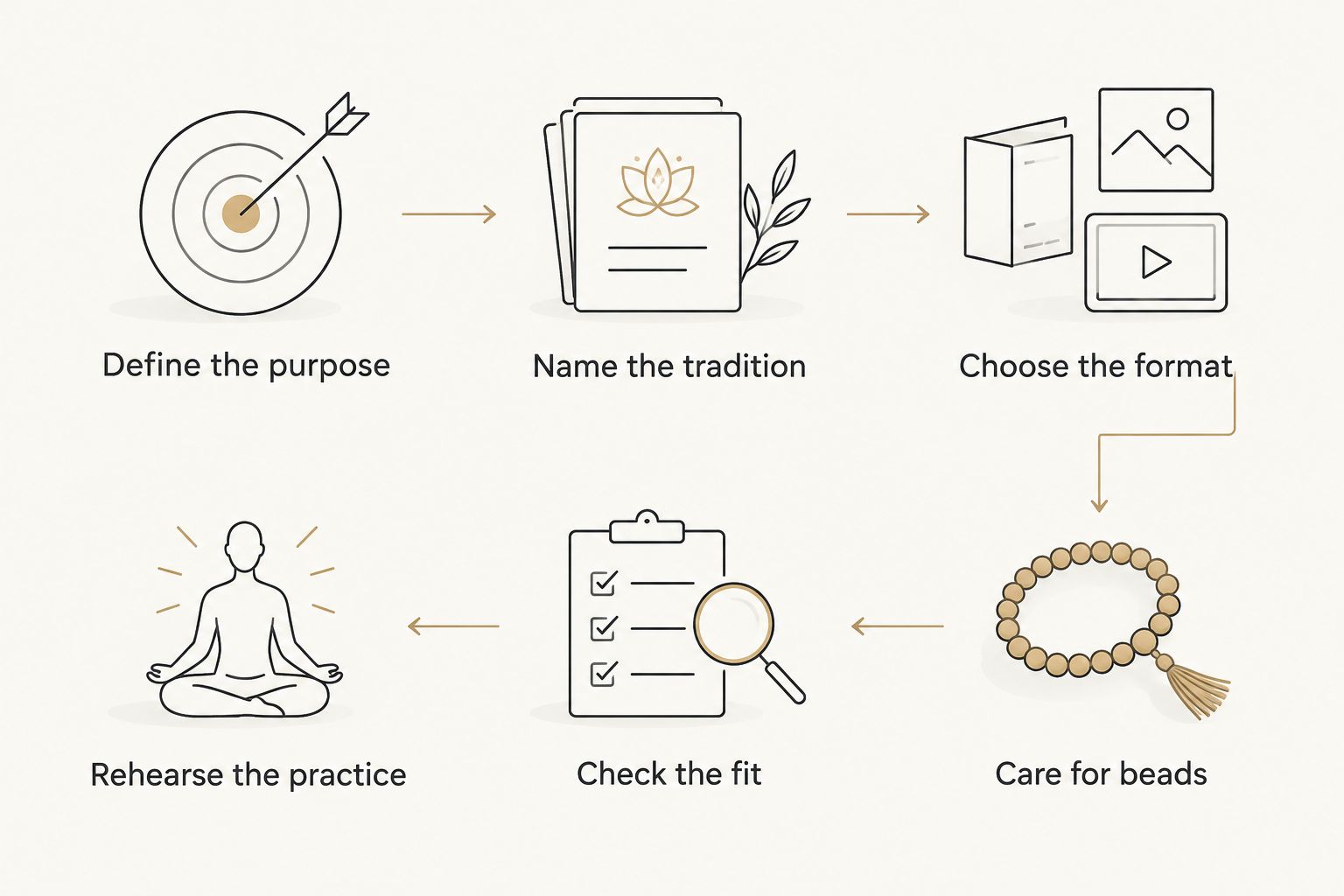
Define the purpose
Start without buying anything. Sit comfortably for 2 minutes and count a short sequence on your fingers, using ordinary breathing or a phrase you understand. This is a suggested rehearsal, not a required duration or a test of meditation ability.
Notice what you actually need. If you lose your place and want a physical counter, beads have a practical role. If counting itself distracts you, an uncounted pause is a valid choice. A mala is not automatically a better teaching tool because it looks more traditional.
Write a purpose you can explain in plain language. For example, you might use a strand for your own repetition practice before students arrive, while keeping the class opening entirely object-free. Keep the purchase decision open until the routine makes sense.
- Choose personal practice or classroom use as the primary purpose.
- Try finger-counting before introducing an object.
- Use a phrase whose meaning you can explain.
- Stop counting when the exercise becomes uncomfortable or distracting.
Name the tradition accurately
Mala counting appears in Hindu and Buddhist traditions, with practices that differ by lineage and community. Yoga teaching does not make every prayer-bead practice interchangeable. Explain the specific practice you know rather than presenting a universal rule for all malas.
A full mala commonly has 108 counting beads. That count does not require you to complete a full round in every class, and it does not establish that one material is more effective than another. Follow your own training when teaching a religious practice.
Keep Taoist blessings, Buddhist imagery, Pixiu symbolism, and chakra teachings distinct. A modern jewelry piece can combine motifs without making those traditions the same. If you cannot explain a symbol responsibly, choose a simpler piece or leave the symbol out of your instruction.
- Identify the tradition behind any mantra you teach.
- Explain meaning before asking students to repeat unfamiliar words.
- Distinguish contemporary jewelry styling from lineage-based practice.
- Offer silent counting without spiritual language as an alternative.
Choose the format before the stone
For seated counting, prioritize beads you can move individually without pulling the cord. For wear between classes, prioritize a fit that stays comfortable during ordinary hand movements. A full strand and a wrist bracelet serve different purposes; neither wins every situation.
EclipticJew mala beads are best for teachers seeking optional symbolic jewelry alongside an established practice. The limitation is practical: a product title alone does not tell you whether its length, stringing, or bead spacing suits your counting technique. Read the individual listing and ask about details that remain unclear.
Start with the format you already know you will use. Then consider wood, seed, or stone for appearance, touch, and personal meaning—not a promised effect. There is no need to collect several materials to make a beginner practice complete.
- Choose a full strand for extended seated counting.
- Choose a shorter bracelet for an optional everyday reminder.
- Check bead movement, cord construction, and any hanging elements.
- Leave the purchase until you can describe its intended use.
Rehearse the practice before teaching it
Test your instructions alone before adding beads to a class. Try 5 comfortable breaths without counting tools, then repeat the exercise with beads if you already own them. This comparison helps you notice practical differences without treating either version as a performance test.
For your 2026 teaching notes, prepare an opening explanation, the practice itself, and a clear ending. Tell students that participation is optional. Avoid implying that people who decline a mantra or an object are missing the real benefit of the class.
Keep attention on the instructions rather than on finishing a strand. Students need permission to stop, change position, or simply listen. If handling beads takes more explanation than the exercise itself, simplify the exercise before teaching it.
- Explain what students will do before handing out anything.
- Demonstrate counting slowly enough to follow.
- Keep breathing comfortable; do not require breath retention.
- Offer finger-counting, listening, or an uncounted pause.
- End without requiring everyone to reach the same bead.
The teaching sequence is straightforward: define the purpose, explain the context, select the format, and rehearse an optional practice. Fit and care come before regular wear.
Check the fit during movement
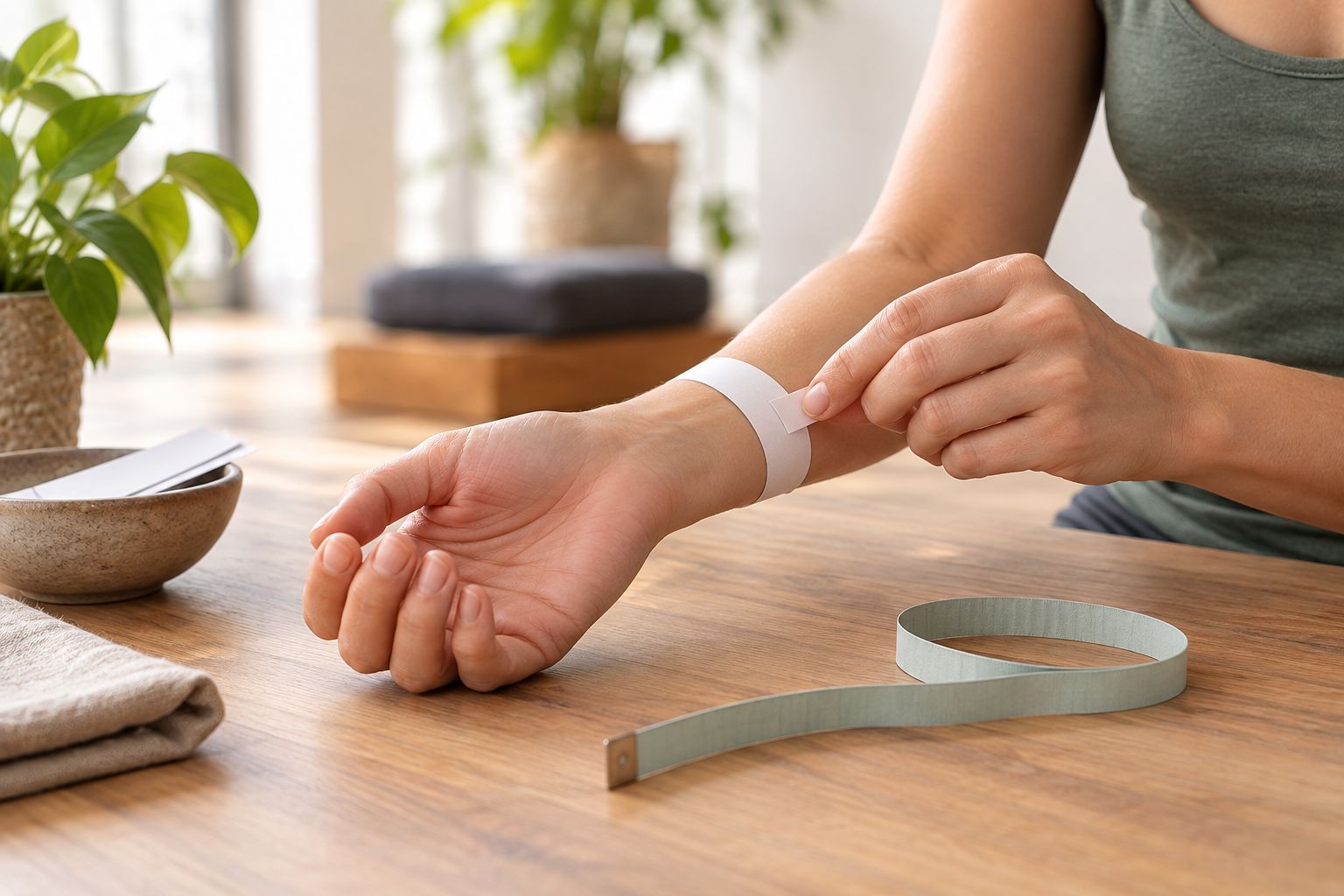
Measure your wrist with a flexible tape, or wrap a strip of paper around it and measure the marked length. Compare your measurement with the individual product's sizing instructions. Do not add a universal allowance: bead size, strand shape, and fastening method affect how jewelry sits.
Before teaching in a piece, test the movements you actually demonstrate. Notice whether beads press into your wrist, a necklace swings forward, or a tassel catches on clothing. Remove jewelry that interferes with movement rather than adjusting the pose around it.
A seated counting strand does not need to become movement jewelry. Keep a clean storage pouch near your teaching space so removal is easy and deliberate. For hands-on assistance, remove pieces that could contact or catch on a student's clothing.
- Measure where the bracelet will actually sit.
- Check the listing's dimensions and construction separately.
- Rehearse a forward fold and a weight-bearing hand position.
- Remove loose strands before demonstrations or hands-on assistance.
A wrist measurement is more useful than guessing from a photograph. Record the measurement, then compare it with the fit information for the specific piece you are considering.
Care for beads between classes
Inspect the strand before you use it. Look for fraying, loosened knots, rough bead edges, or a fastening that no longer holds securely. If something catches or stretches unexpectedly, stop using the piece until you can assess the construction.
Keep physical care separate from symbolic cleansing. An intention-setting ritual does not remove sweat or repair a cord. Follow material-specific instructions rather than assuming that water, salt, oils, or smoke are appropriate for every wood, seed, stone, and finish.
Add a care check to your 2026 teaching routine. Remove bracelets before showering and at night, especially elastic-cord pieces. Store a dry strand without stretching it around another object, and keep personal counting beads separate from any classroom demonstration set.
- Check cord, knots, and fastening before use.
- Use a soft dry cloth for a gentle surface wipe.
- Follow the listing before applying moisture or cleaning products.
- Remove bracelets before sleep, showering, and sweaty practice.
- Store strands dry and without tension.
Compare mala options by teaching use
The best option depends on whether you need a counter, a wearable reminder, or no object at all. This 2026 comparison focuses on use and limitations rather than assigning spiritual rankings to materials.
| Option | Best for | Practical advantage | Key limitation |
|---|---|---|---|
| Finger-counting | Teachers testing a routine before buying | Needs no equipment and is easy to offer as an alternative | Does not provide a separate bead for each repetition |
| Full seed mala | Teachers who prefer a seed-based strand for seated repetition | Provides individual beads to move through | Full strands need storage and careful handling during movement |
| Wood mala or bracelet | Teachers who prefer wood's appearance and tactile character | Can serve as a counting object or personal reminder, depending on construction | Water, finishes, stringing, and care requirements vary by piece |
| Natural-stone bracelet | Teachers choosing symbolic jewelry for time between classes | Offers a material and color you can choose for personal meaning | A short bracelet is not equivalent to a full counting strand |
For EclipticJew shoppers, the Bodhi Seed Mala Necklace for Meditation and Sandalwood Mala Mala Bracelet for Calm illustrate two different formats. Best for seated counting: consider the Bodhi necklace, whose supplied description identifies 108 beads. Best for a double-wrap wood format: consider the sandalwood bracelet, whose supplied description identifies natural green sandalwood.
Neither product's meditation or calm wording establishes a demonstrated effect. Confirm dimensions, fastening, and care before deciding whether either format suits your teaching day. Optional Taoist blessing services apply only where the individual listing confirms them; they are not a requirement for using beads.


Common mistakes yoga teachers make with malas
Treating a purchase as a teaching qualification
Owning a mala does not establish knowledge of mantra, religious practice, or meditation instruction. Teach within your training and explain the exercise clearly. If your class works without beads, keep that version available rather than turning jewelry into an entry requirement.
Wearing a counting strand through every demonstration
A necklace that works during seated repetition can hang into your face in a forward fold. A bracelet can press against a weight-bearing wrist. Test each piece off the teaching clock, then remove it whenever it competes with movement or clear instruction.
Mixing traditions into a single explanation
Do not describe a Taoist blessing, a Buddhist figure, and a chakra association as interchangeable sources of the same effect. Explain only the context you can support. A simple, accurately described strand is a better teaching choice than a symbol-heavy piece you cannot explain.
Reading intention labels as promised results
Words such as calm, protection, or wealth can describe a personal intention or traditional association. They do not establish that jewelry changes health, safety, or income. If a student asks what beads do, explain their counting function and distinguish symbolism from demonstrated effects.
Giving everyone the same care instructions
A seed strand, wood bracelet, and stone piece can have different finishes and construction. Do not prescribe soaking or oils for all of them. Keep physical cleaning instructions specific, and do not replace care with a ritual intended to mark personal meaning.
FAQ
What's the best mala for a yoga teacher who is just starting?
The best starting option is the format that supports a practice you already understand. Try finger-counting first, then consider a full strand for seated repetition or a shorter bracelet for a personal reminder.
Do yoga teachers need a mala with 108 beads?
No, yoga teachers do not need a mala with 108 beads to teach yoga. A full mala commonly uses that count, but an optional class exercise can use a shorter sequence or no beads at all.
Can I wear mala beads while demonstrating yoga poses?
Remove mala beads whenever they interfere with movement, weight-bearing positions, or hands-on assistance. Test fit before class rather than discovering a swinging strand or uncomfortable bracelet during a demonstration.
Are bodhi seed malas more effective than wood malas?
Bodhi seed malas are not established as more effective meditation tools than wood malas. Choose by handling, construction, personal meaning, and the requirements of any tradition you practice.
How do I introduce mala beads without imposing spiritual beliefs?
Explain their counting function and make participation optional. Offer finger-counting, listening, or a quiet pause without a mantra, and identify any religious context accurately.
Do EclipticJew mala beads all come with a Taoist blessing?
No, EclipticJew offers optional Taoist blessings on select pieces rather than every mala. Check the individual listing for the service and any blessing video; neither is necessary for a counting practice.
Can I sleep in a mala bracelet after an evening class?
Take your mala bracelet off before sleeping, especially if it uses elastic cord. Store it dry and without tension, following the individual piece's care instructions.
One last thing
The most useful rehearsal is an object-free one. Teach yourself the opening, counting instruction, and ending without touching beads; then decide whether adding them makes the practice clearer or merely adds another task.
For your next class, keep the optional version ready before choosing jewelry. If an EclipticJew piece fits your personal practice, start by measuring your wrist or checking the strand dimensions—not by searching for a promised outcome.


