

A new home blessing ritual is a personal way to welcome your space: make one area usable, name what you want home to feel like, and connect that intention to an everyday action. You do not need crystals, smoke, a purchase, or a particular belief. A personal welcome is not the same as a formal religious blessing, and neither replaces practical home safety.
- A new home blessing ritual marks a beginning; it does not guarantee protection, prosperity, or peace.
- Start with a usable space, a personal intention, and an action you can repeat.
- Keep religious house blessings distinct from a self-created welcome ritual.
- EclipticJew jewelry can be an optional intention reminder, never a requirement for welcoming your home.
How do you perform a new home blessing ritual?
Start with a small, usable area rather than trying to transform the whole home. Choose words that describe the life you want to build there, then finish with something practical: prepare a meal, put away your keys, or agree on how you will share the space. If your move marks a difficult transition, this guide to choosing crystals by intention can help you focus on what you want to practice rather than what you want to erase.
Use the following sequence as a personal practice. The meaning comes from your participation, not from performing every step perfectly.
Make space
- Choose one place to begin. The doorway, kitchen table, or a quiet corner is enough. Clear a safe path, remove packaging, and set aside anything that needs repair. You can welcome an unfinished home without pretending the unpacking is complete.
A doorway makes sense when arriving is the moment you want to mark. A kitchen table works when your intention centers on nourishment or company. Choose the place you will actually use, not the one that looks most ceremonial.
Name an intention
- Write 1 sentence about how you want to live here. Use your own words rather than copying a blessing that belongs to an unfamiliar tradition. Describe a practice within your control, such as listening before answering, welcoming friends thoughtfully, or keeping room for rest.
Keep the sentence realistic. A home can hold disagreement, grief, and unfinished chores while still being cared for. An intention should give you direction, not make ordinary difficulty feel like failure.
Walk together
- Visit the spaces that matter to you. Move through the home at a comfortable pace, or stay seated if walking is impractical. Notice what each area needs before adding symbolic objects. In a shared home, invite others to participate without requiring them to speak or agree with spiritual language.
You do not have to enter every room. Respect private bedrooms and workspaces. A welcome loses its warmth when someone feels pressured to surrender a boundary for the ceremony.
Choose an action
- Give your intention a practical counterpart. If you want a welcoming entrance, decide where shoes and keys belong. If you want considerate evenings, discuss noise. If you want room for friendship, choose a way to invite someone over that suits your household.
Select something small enough to do today. Washing the cups for your first shared drink is more useful than promising that the home will always feel peaceful.
Close simply
- End with an ordinary act of arrival. Drink water, share food, open a book, or sit quietly for 5 minutes. Thank anyone who joined you. If you used a meaningful object, place it somewhere stable where it will not obstruct a doorway or become a hazard.
There is no required closing phrase. You can finish when you feel ready to return to the ordinary work of living there.
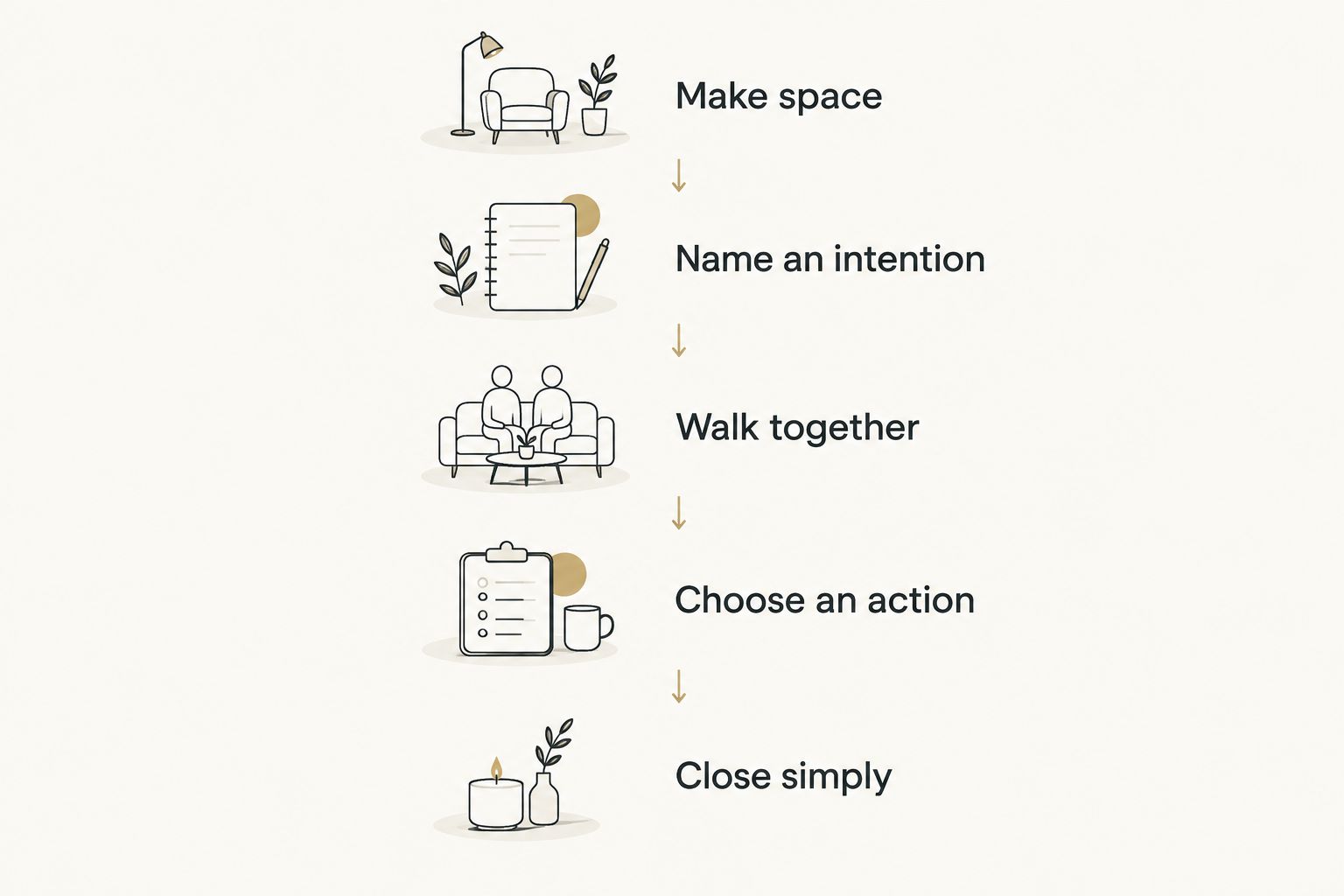
Why this matters
Moving changes familiar routines. Your keys need a new place; your evening takes a different shape; rooms still contain boxes instead of the objects you associate with home. A welcome ritual gives you a deliberate moment to acknowledge that change without demanding that everything already feel settled.
Separate the welcome from essential setup. Locate exits, check the home's safety arrangements, and address maintenance concerns through the appropriate owner, manager, or professional.
Which kind of home welcome fits your beliefs?
Choose the format before choosing objects. A secular welcome, a family gathering, and a religious blessing serve different intentions; none needs to imitate the others. The best choice is one you can describe honestly to everyone who shares the home.
| Approach | Best for | What it offers | Limitation |
|---|---|---|---|
| Personal welcome | Someone creating their own practice | Flexible words, silence, and everyday actions | It is not a formal religious blessing |
| Shared household welcome | Partners, families, or housemates | A chance to express wishes and agree on habits | It needs consent and room for different beliefs |
| Religious house blessing | Someone seeking a ceremony within their faith | Guidance from their own religious community | Requirements belong to that tradition, not a generic checklist |
Choose a personal welcome when you want a meaningful beginning without claiming religious authority. Choose a shared welcome when the central question is how you will live together. For a religious ceremony, ask your own community what preparation and participation involve.
A personal welcome without religious language
Use gratitude, hopes, and household commitments. You can acknowledge the effort it took to move, name what you appreciate about the space, and choose a habit you want to establish. Silence is also an option; you do not need to perform spirituality for the moment to matter.
The advantage is freedom to make the practice yours. The limitation is equally clear: words you create are personal words, not a traditional rite simply because you call them a blessing.
A shared welcome with different beliefs
Ask each person whether they want to speak, listen, or skip the ritual. Agree on language before starting, especially when someone dislikes references to energy, spirits, or religion. Keep shared rooms free of ritual materials that another resident does not want there.
A new household can write 3 agreements about daily life: one about shared space, one about guests, and one about quiet. Revisit them when the household's needs change.
A religious blessing within your own tradition
Seek guidance from a religious leader or community you trust. Ask who conducts the ceremony, what household members are expected to do, and whether any preparation is needed. Do not assume instructions from another tradition apply to yours.
Taoist practices, Buddhist practices, feng shui, and chakra systems are not interchangeable names for a universal ritual. A generic welcome guide should not combine them into a ceremony or claim authority to perform their rites.
Why a new home blessing ritual varies
A personal ritual changes with the people and space involved. Adapt the format to what you can do comfortably rather than treating a borrowed checklist as a test.
- Belief: Choose secular language, personal symbolism, or guidance within your own faith. Do not present one as another.
- Household consent: Shared homes need agreement about participation, words, and objects in common areas.
- Physical access: A seated welcome can carry the same personal intention as a walk through the rooms.
- Available space: One clear corner is sufficient when boxes still fill the rest of the home.
- Sensory comfort: Silence and ordinary room lighting avoid the need for fragrance, smoke, or flames.
- Reason for moving: A joyful move and an unwanted move need different words. Leave room for mixed feelings.
Before inviting housewarming guests, tell them whether the gathering includes a personal welcome, a religious ceremony, or simply time together. That gives them a clear choice about joining in.
Do you need crystals or a bracelet for a home blessing?
You do not need crystals or jewelry for a new home blessing ritual. An object is useful only when its meaning helps you remember the intention you have already chosen. A handwritten note, an existing keepsake, or an empty space can serve that role without a purchase.
If you enjoy natural-stone jewelry, a bracelet can be a tactile reminder of the intention you chose. EclipticJew jewelry suits readers who want personal symbolism in an everyday piece.
Before choosing a bracelet, check its material, construction, fit and care information. If a listing offers an optional Taoist blessing, that service is distinct from a house blessing.
The benefit of a wearable reminder is that you can carry its personal meaning beyond the doorway. The drawback is that jewelry also needs care and a comfortable fit. Remove bracelets at night, and keep jewelry away from cleaning tasks unless its specific care instructions permit them.
Can you bless a rented home or one room?
You can create a personal welcome in a rented home or a single room without changing the property. Keep the practice reversible: speak, reflect, arrange your own belongings, or write an intention. Ask permission before involving shared areas.
A bedroom in a larger household can be your focus. You do not need to claim the whole building or assign meanings to someone else's space. Your intention concerns how you will inhabit the area available to you.
What if the home does not feel welcoming yet?
You do not have to feel grateful on command. A move can involve loss, uncertainty, or circumstances you did not choose. Name what is true, then choose one practical way to make the next part of the day easier.
Start with a usable bed, a place to eat, or a clear path to the bathroom. Comfort does not have to arrive all at once. If there is a concrete safety concern, address that concern directly rather than interpreting unease as evidence that a ritual failed.
FAQ
What do I say during a new home blessing ritual?
Say what you want to practice in the home, using your own words. Name an intention such as considerate conversation or making time for rest, then pair it with a practical action.
Can I do a new home blessing ritual by myself?
You can create a personal home welcome by yourself. Choose a comfortable place, name your intention, and finish with an ordinary act of arrival; a formal religious blessing follows the requirements of its own tradition.
Do I need sage, incense, or candles to bless my home?
You do not need sage, incense, or candles for a personal home welcome. Silence, ordinary lighting, and words you choose are enough, without introducing smoke, fragrance, or flames.
Can crystals protect my new home?
Crystals do not guarantee protection for a home. You can use a crystal as personal symbolism, while handling security, maintenance, and fire safety through practical measures.
Is a personal home blessing the same as a Taoist blessing?
A self-created home welcome is not the same as a Taoist blessing. If you want a Taoist ceremony, seek guidance within that tradition rather than combining unrelated practices from a general guide.
When should I do a home blessing after moving?
Choose a time when you can pause comfortably and safely; a personal welcome has no required moving-day deadline. You can begin before unpacking is finished or wait until the household is ready.
Can I repeat my new home blessing ritual later?
You can repeat a personal welcome when you want to revisit your intentions. Keep the repeat practice voluntary, and update the everyday action if your household's needs have changed.
One last thing
A welcome ritual does not need to keep its original wording forever. Save your intention somewhere you can find it, then revise it when you notice what the home actually needs. An intention about hosting might become an intention about boundaries; a wish for quiet might become a plan for spending time together.
If you choose a stone from EclipticJew as a reminder of this beginning, start with its material and care needs. Measure your wrist before choosing a bracelet so the piece fits the life you are settling into.


