

Instead of repeatedly checking your balance without deciding what to do next, build a pixiu bracelet budgeting routine: use an optional bracelet as your reminder to review transactions, check upcoming bills, and choose a practical action. The bracelet carries personal meaning; your records and decisions do the budgeting.
- A pixiu bracelet budgeting routine pairs personal symbolism with transaction reviews and spending decisions, not guaranteed wealth.
- EclipticJew Pixiu jewelry suits shoppers who want a symbolic reminder alongside practical money habits.
- Use a notebook or spreadsheet; buying jewelry is not required.
- Review upcoming bills, record spending, and choose a specific next action at each check-in.
Why this matters
A bank balance tells you what is in an account. It does not, by itself, show which expenses that money must cover before your next income arrives. A useful check-in connects the balance to those obligations.
Pixiu is a mythical creature associated with wealth and its preservation in Chinese cultural and feng shui traditions. You can respect that association without treating jewelry as a financial tool. This routine is a personal adaptation, not a prescribed Taoist ceremony.
EclipticJew Pixiu jewelry is best for shoppers who want a symbolic reminder alongside practical money habits. It does not replace account records, bill payments, or financial advice.
For your 2026 routine, begin with an action rather than a wish: review the next bill before making another discretionary purchase. If writing helps, use a daily intention journal question to name that action before opening your accounts.
Before you start
- Gather your records. Have private access to account balances, recent transactions, upcoming bills, and your existing budget. Never put passwords or full account numbers in a journal.
- Choose your working surface. Use a notebook, spreadsheet, or budgeting application you already understand. A bracelet is optional; a calendar reminder works without jewelry.
- Separate balances from commitments. Pending transactions and unpaid bills need attention before you decide money is available to spend. Do not count an expected paycheck as money already received.
Set aside a suggested 10-minute appointment for the first review. That is a starting limit, not a promise that every financial situation fits inside it. If your records need substantial cleanup, schedule that separately rather than abandoning the smaller routine.
Choose a place to keep the budget
Both methods below support this workflow. Neither requires a connection to jewelry, a blessing service, or a new purchase.
| Method | Best for | Advantage | Limitation |
|---|---|---|---|
| Notebook | A short, hands-on review | Keeps the next action visible without configuring software | You must update entries and totals yourself |
| Spreadsheet | A review organized around categories and totals | Formulas can calculate totals from the entries you provide | Incorrect entries or formulas can produce misleading totals |
Choose the method you will maintain, not the one that looks most elaborate. If you already use YNAB, keep your current budget there and use this guide as a check-in sequence. The bracelet is a physical cue, not a digital integration.
Your reminder and intention
The reminder should lead to the same small action each time. Keep the meaning simple enough to use on an ordinary workday, including days when you do not feel particularly reflective.
- Choose an existing moment. Attach the check-in to something predictable, such as sitting down after breakfast or finishing your weekly household planning.
- Write an action-led intention. Try a phrase such as reviewing commitments before spending. Treat this as a suggested personal prompt, not a traditional formula.
- Set a reminder. Create a calendar appointment with a plain title, such as Money check-in. Put the notebook or budget shortcut where you will find it.
- Give the bracelet a limited role. If you wear Pixiu jewelry, let noticing it prompt you to open the budget. Do not interpret its position, appearance, or condition as information about your finances.
Expected result: you know when the review happens, where the records live, and what action starts it. You can still complete the routine if you forget your bracelet.
For a 2026 notebook, label the first page with the current month and your review date. Leave room for the next appointment. A dated record is more useful than repeatedly rewriting an intention without checking what happened.
Your spending review
Start with what has happened, then look at what must happen next. Do not begin by judging yourself or searching for a symbolic explanation for a difficult week.
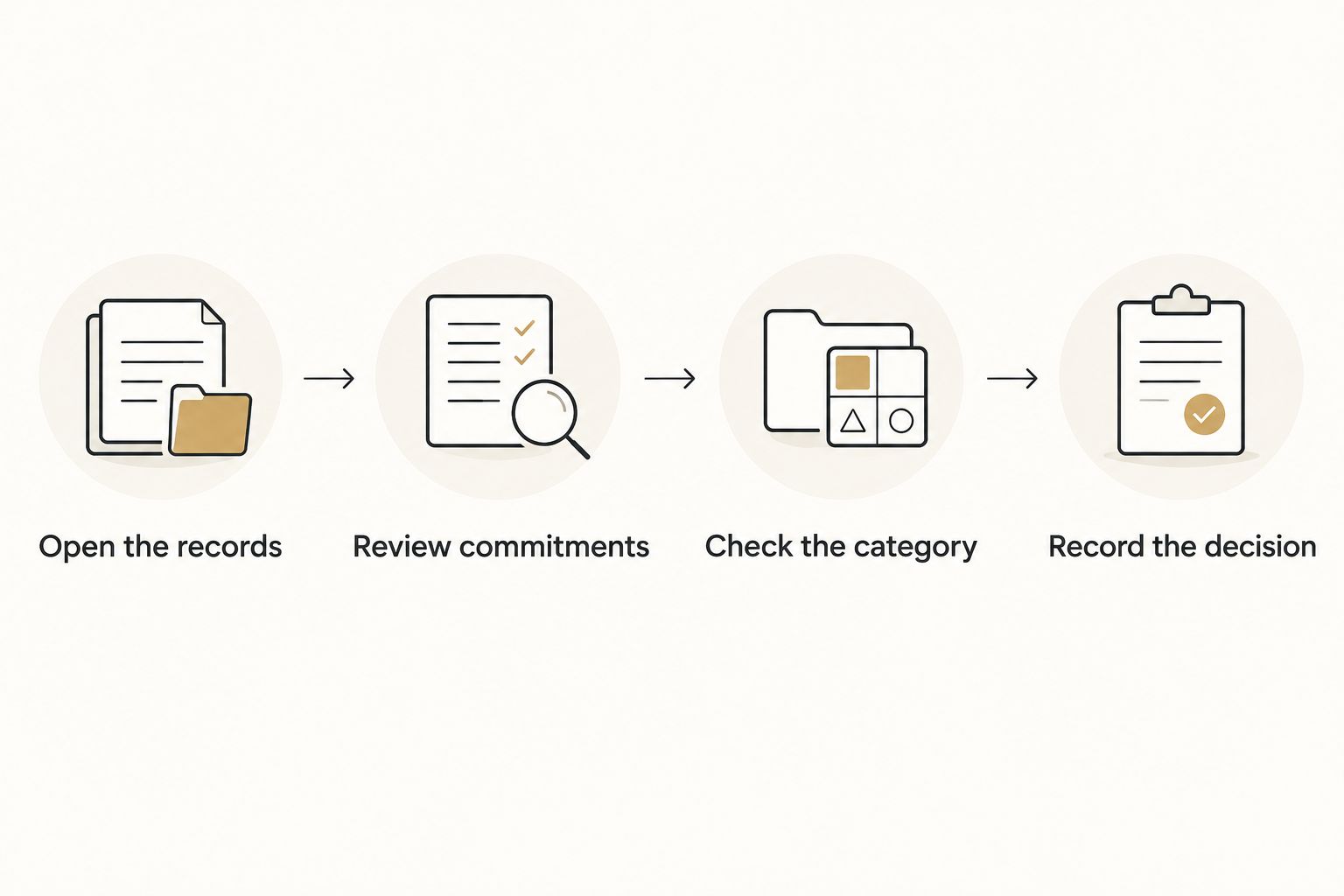
- Open the current records. Read recent transactions and compare them with your notebook, spreadsheet, or existing budget entries.
- Resolve unfamiliar spending. Check receipts or merchant details before assigning a category. Contact your financial institution promptly about transactions you believe are unauthorized.
- Review commitments. List bills, scheduled payments, and essential expenses due before your next expected income. Mark which have already been paid.
- Check the relevant spending category. Before an optional purchase, look at the money assigned to that purpose after existing commitments. Do not use the account balance alone as permission.
- Record the decision. Write whether you will proceed, postpone, reduce the purchase, or adjust another part of the budget.
Expected result: your spending decision has a reason you can read later. The bracelet has served as a reminder, while the records have supplied the information.
For your first 2026 review, use a suggested 2-minute scan to identify the next unpaid bill before doing a longer transaction check. This keeps the opening task specific. It is not a deadline for solving every money concern.
Keep a small decision log
A useful entry names the situation, the relevant commitment, and the next action. For example, describe a discretionary purchase you are considering, note the bill that comes first, and record when you will reconsider the purchase.
Avoid writing only that you want more abundance. That wish can remain meaningful, but it does not tell you whether a payment is due or which expense needs attention.
Your next action and weekly reset
Close each appointment with something you can actually complete. Reviewing numbers without choosing an action leaves the next check-in starting from the same uncertainty.
- Choose a specific task. Examples include recording a missing receipt, checking a bill's due date, or discussing a shared expense with your partner.
- Name the next opportunity. Connect the task to a real moment, such as your lunch break or the next household planning conversation.
- Record completion separately from intention. Mark a task complete only after doing it. Wearing the bracelet or repeating the intention does not complete the financial task.
- Review the routine after 1 week. Ask whether the timing worked, whether your records were accessible, and whether each appointment ended with a decision.
Expected result: you finish with a task and a return point, rather than a general promise to become better with money.
Keep your 2026 review notes factual. Record a missed appointment as a scheduling problem to address, not evidence that your intention failed. If the appointment is too long, reduce its scope to upcoming bills and recent spending, then schedule deeper planning separately.
Keep Pixiu optional
If you want a physical reminder, consider an EclipticJew Pixiu bracelet design. Check the listing for materials, fit, construction, and any blessing details before choosing it. Do not infer those details from the symbolic name alone.
The advantage is personal meaning in an object you can notice during the day. The limitation is equally clear: jewelry cannot categorize transactions, pay bills, prevent losses, or increase income. Skip a purchase if buying the reminder conflicts with the budget it is meant to support.
An optional Taoist blessing is a religious or cultural service, not a budgeting feature or a promise of financial results. EclipticJew offers blessing options on select pieces; confirm the individual listing rather than assuming every Pixiu design includes one.
A second workflow: check in whenever income arrives
A scheduled review is useful for maintenance. An income-arrival review addresses a different decision: what the money you have just received needs to cover.
Use this variant alongside the weekly appointment, especially when payment timing changes. Do not treat a notification about an expected payment as confirmation that the money has arrived.
- Confirm the deposit in your account records.
- Review bills and essential expenses due before the next expected payment.
- Assign the received money within your existing budget, accounting for those commitments first.
- Review savings, debt-payment plans, and discretionary categories according to your circumstances.
- Record any shortfall and the next practical response, such as reviewing an expense or contacting a provider before a missed payment.
Expected result: incoming money has a plan before you make optional spending decisions. The Pixiu symbolism remains a personal reminder to be attentive, not an explanation for why income arrived.
For irregular income in 2026, keep expected payments clearly separate from received payments in your notes. This distinction prevents a hopeful forecast from becoming permission to spend money that has not arrived.
Troubleshooting
You notice the bracelet but ignore the budget
Make the first action smaller. Open the budget and identify the next unpaid bill, then decide whether a longer review is needed. Keep the calendar appointment as the primary reminder instead of relying entirely on jewelry.
Your account balance and budget do not agree
Compare entries against account records. Check pending transactions, missing purchases, duplicate entries, and transfers that were incorrectly recorded as spending. Do not adjust a total merely to make the disagreement disappear.
The review becomes a guilt session
Replace character judgments with descriptions. Record what you spent, which commitment changed, and what you will do next. If the routine repeatedly causes distress, pause the symbolic element and seek suitable financial or mental-health support for the underlying concern.
You forget the bracelet or remove it at night
Use the calendar reminder and continue normally. Remove bracelets at night rather than making overnight wear part of the routine, especially with elastic-cord jewelry. Missing the object does not invalidate the intention or change your financial position.
You begin treating ordinary events as financial signs
Return to verifiable information: transactions, due dates, and received income. A broken cord, an unexpected expense, or a missed appointment is not evidence that Pixiu has withdrawn protection. Arrange repairs or address the expense without adding a purchase or ritual obligation.
Customize your workflow
Choose an adjustment that addresses the actual difficulty. For shared finances, agree on who records spending and who checks upcoming payments. For distraction, keep the appointment focused on the budget rather than browsing shopping sites during it.
If a tactile object feels uncomfortable, remove it. If you prefer no symbolic object at all, keep the same review sequence and use a written intention instead. The practical routine remains intact.
Measure success by completed actions: records updated, commitments checked, and decisions documented. Do not measure it by whether you feel lucky after wearing jewelry. EclipticJew symbolism can accompany the practice without becoming the standard used to judge it.
FAQ
How do I start a pixiu bracelet budgeting routine?
Choose a regular check-in, open your spending records, review upcoming bills, and record a next action. Use a Pixiu bracelet only as an optional reminder to begin.
Does wearing a Pixiu bracelet attract money?
Pixiu has wealth-related associations in Chinese cultural and feng shui traditions, but wearing a bracelet does not guarantee money or financial success. Base spending decisions on received income, commitments, and accurate records.
Can I use this routine with YNAB?
Yes, you can use the check-in sequence alongside an existing YNAB budget. The bracelet is a physical reminder; it does not connect to the application or update transactions.
Do I need to buy a bracelet to make the routine work?
No, buying jewelry is not required. Use a calendar reminder, a notebook, or an object you already own if that suits you better.
Which wrist should I wear a Pixiu bracelet on for budgeting?
Budgeting does not require a particular wrist. Follow your own tradition if relevant, while choosing a comfortable fit that does not interfere with writing or typing.
Does a Taoist blessing make a budgeting routine more effective?
A Taoist blessing is not a financial mechanism or a guarantee of budgeting results. If the service matters to your practice, confirm the individual product details and keep the practical money review separate.
What should I do if I miss a money check-in?
Resume at the next practical opportunity and review upcoming commitments first. Change the reminder or appointment length if the same scheduling problem keeps recurring.
One last thing
A useful money reminder sometimes tells you not to buy the reminder. Try the routine with what you already own before choosing jewelry. If you later want a stone or Pixiu design, measure your wrist and check the individual listing for a comfortable fit.


